
Respirator Selection
How to Develop an OSHA-Compliant Respiratory Protection Program
 Kevin Rittger, MD, FACEP, Founder and Medical DirectorUpdated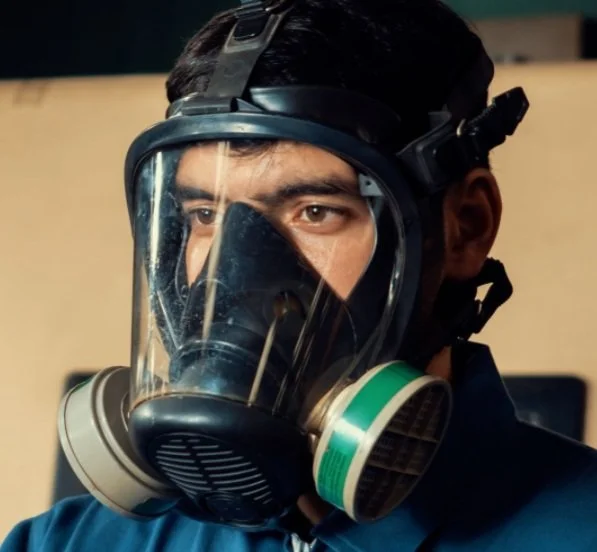
Any employer that requires workers to wear respirators must establish and maintain a written Respiratory Protection Program (RPP) under 29 CFR 1910.134. The RPP must be worksite-specific, administered by a qualified program administrator, and cover respirator selection, PLHCP medical clearance, fit testing, training, maintenance, air-quality procedures for atmosphere-supplying respirators, and an annual program evaluation.
Key Requirement. Any employer requiring respirator use must establish and maintain a written Respiratory Protection Program with worksite-specific procedures, administered by a suitably trained program administrator. Reference: 29 CFR 1910.134(c).
Key Takeaways
- A written RPP is required whenever workers are required to wear respirators.
- The RPP must be administered by a program administrator qualified by training or experience commensurate with program complexity.
- Minimum elements: respirator selection, PLHCP medical evaluation, fit testing, training, maintenance, air-quality procedures for atmosphere-supplying respirators, and program evaluation.
- The RPP must be reviewed and updated at least annually.
- Voluntary respirator use may still trigger written RPP elements (Appendix D distribution, medical clearance for non-filtering-facepiece respirators).
What is a Respiratory Protection Program?
A Respiratory Protection Program is the written, worksite-specific set of procedures an employer uses to comply with 29 CFR 1910.134 and protect workers from inhalation hazards. If you require workers to be exposed to harmful airborne contaminants that cannot be eliminated by engineering controls, and respirators are part of the response, a written RPP is mandatory.
Minimum elements of an RPP
| Element | What it covers |
|---|---|
| Respirator selection | Selecting NIOSH-certified respirators that match the hazard, exposure level, and work environment |
| Medical evaluation | PLHCP review of the MEQ for every respirator user before fit testing or use |
| Fit testing | QLFT or QNFT for every tight-fitting respirator user before initial use, with facepiece change, and at least annually |
| Training | Routine and emergency use, limitations, cleaning, storage, and PLHCP-detectable medical signs |
| Air quality (atmosphere-supplying respirators) | Procedures for supply air purity, quantity, and flow |
| Maintenance and storage | Cleaning, disinfecting, inspection, repair, and storage of respirators |
| Program evaluation | At least annual review of effectiveness and worker feedback |
The program must be administered by a program administrator with the knowledge and authority to run it.
What types of hazards may require respiratory protection?
- Dusts: silica, cadmium, cotton, asbestos, coal
- Fumes: hexavalent chromium, zinc, nickel, manganese, cobalt
- Gases and vapors: ammonia, carbon monoxide, hydrogen sulfide, isocyanates, acetone
- Airborne pathogens: COVID-19, tuberculosis, influenza, measles
- Oxygen-deficient or oxygen-enriched atmospheres
- Any other atmospheric hazard immediately dangerous to life and health (IDLH)
How to determine employee exposure
- Identify exposed workers and tasks. Walk through every job task that may generate airborne contaminants or place workers in IDLH atmospheres.
- Conduct a job hazard analysis. Determine whether engineering and work-practice controls can reduce exposure below the PEL.
- Pull SDS data. Identify the PEL or other regulatory limit for each chemical.
- Industrial hygiene sampling. A Certified Industrial Hygienist can air-sample the breathing zone and produce an objective written exposure assessment. See our companion article on the respiratory hazard assessment.
If exposure exceeds the PEL after feasible controls, an appropriate respirator must be selected.
How to select a respirator
| Class | What it does | When to use |
|---|---|---|
| Air-purifying respirator (APR) | Filters the air through a particulate, gas, or vapor element | When the hazard is known, the contaminant has a warning property, and oxygen is adequate |
| Atmosphere-supplying respirator (SAR or SCBA) | Provides an independent air supply | When the atmosphere is IDLH, oxygen-deficient, or the contaminant exceeds APR capabilities |
Example: A sand-blasting operator with measured crystalline silica exposure above the PEL needs an APR with a particulate filter (P100), or higher-class protection depending on the exposure ratio. A worker entering a tank with elevated chemical vapor concentrations beyond cartridge capacity needs an SAR or SCBA.
How to make sure workers are protected
- PLHCP medical clearance. OSHA requires a Physician or other Licensed Health Care Professional to review a completed Medical Evaluation Questionnaire (MEQ) for every respirator user under 29 CFR 1910.134(e). VestMed handles MEQs 100% online with PLHCP review and audit-ready records.
- Fit testing. Any tight-fitting respirator requires QLFT or QNFT before initial use, with facepiece change, and at least annually. See our what is respirator fit testing article.
- Training and retraining. Initial and at least annual training on hazards, use, limitations, and maintenance.
Training requirements at a glance
- Information about the hazards workers will be exposed to
- Proper respirator use in routine and emergency situations
- Proper use of the specific assigned respirator
- Cleaning, disinfection, storage, inspection, repair, discard, and maintenance
- (If applicable) Air quality, quantity, and flow procedures for atmosphere-supplying respirators
- Annual retraining at minimum
Program review
The RPP must be reviewed and updated at least annually, and additionally whenever workplace conditions, contaminants, or respirators change.
Voluntary use
Voluntary respirator use is permitted, but it does not eliminate written program requirements. Filtering facepiece-only voluntary use requires distribution of Appendix D. Voluntary use of any non-filtering-facepiece respirator triggers PLHCP medical clearance and additional written program elements. See mandatory vs voluntary respirator use.
Implementation Best Practices
| Step | What to do |
|---|---|
| 1. Appoint a program administrator | Qualified, trained, with documented authority |
| 2. Conduct a respiratory hazard assessment | Identify hazards, exposed workers, and tasks |
| 3. Implement engineering controls first | Substitution, LEV, enclosure, ventilation |
| 4. Select NIOSH-certified respirators | Match hazard, exposure, and work environment |
| 5. Clear every wearer through a PLHCP MEQ | Before fit testing |
| 6. Fit test, train, document | Annually and on facepiece change |
| 7. Set written maintenance and recordkeeping procedures | Cleaning, storage, inspection, records |
| 8. Review the program at least annually | Worker feedback, exposure changes, citations |
Conclusion
The RPP is the operational backbone of OSHA compliance for any workplace where workers wear respirators. Build it around the eight required elements, run it from a qualified program administrator, and review it at least once a year. VestMed handles the medical clearance side of the RPP through 100% online digital MEQs reviewed by PLHCPs, with audit-ready records.
Frequently Asked Questions
Q: When is a written respiratory protection program required?
A: Whenever an employer requires workers to wear respirators. Voluntary use of any respirator other than a filtering facepiece also triggers written program elements including PLHCP medical clearance. Reference: 29 CFR 1910.134(c)(1) and (c)(2).
Q: Who can serve as the program administrator?
A: Any qualified employee with training or experience commensurate with program complexity. There is no specific certification required, but the administrator must have authority to run the program and understanding of 29 CFR 1910.134. Reference: 29 CFR 1910.134(c)(3).
Q: How often must the RPP be reviewed?
A: At least annually, and whenever workplace conditions, contaminants, or respirators change. The review should capture worker feedback on fit, comfort, and any issues with respirators in routine and emergency use.
Q: What records must we keep?
A: Written exposure data, PLHCP written recommendations from MEQ reviews, fit-test records, and training records. Records must be maintained for the duration of employment plus 30 years for medical records, and made available to OSHA on request.
Q: Do voluntary respirator users need medical clearance?
A: Workers using a filtering facepiece voluntarily do not require medical clearance, but Appendix D must be distributed. Voluntary use of any non-filtering-facepiece respirator triggers PLHCP medical clearance under 29 CFR 1910.134(c)(2)(ii).
Sources
- 29 CFR 1910.134 - Respiratory Protection
- OSHA Respiratory Protection Training Videos
- OSHA Small Entity Compliance Guide for the Respiratory Protection Standard
The information on this page is meant to be informative and is not a substitute for professional or legal advice.
Ready to streamline respirator clearance for your workforce?
VestMed delivers 100% online digital respirator clearance, reviewed by our PLHCPs and audit-ready under 29 CFR 1910.134. No monthly fees. Pay only for clearances completed.
Get a Quote or call 844-837-8767 to speak with a VestMed representative.
Related reading
- OSHA Compliance
How to Conduct a Respiratory Hazard Assessment
Step-by-step guide to evaluating workplace respiratory hazards: identify exposures, conduct air sampling, document the assessment, and select respirators.
- OSHA Compliance
Mandatory vs Voluntary Respirator Use: What OSHA Actually Requires
Mandatory vs voluntary respirator use under OSHA 29 CFR 1910.134: what employers must do for each, plus Appendix D guidance for voluntary N95 use.
- Training Materials
Respiratory Protection Training: An OSHA Compliance Guide
OSHA respiratory protection training requirements explained: required topics, frequency, retraining triggers, recordkeeping, and practical delivery methods.
Kevin Rittger
MD, FACEP, Founder and Medical Director