OSHA Compliance
CMS Infection Control Survey Readiness: A Respiratory Protection Checklist for Skilled Nursing (F880)
 Michael MartinezSr. Director of Sales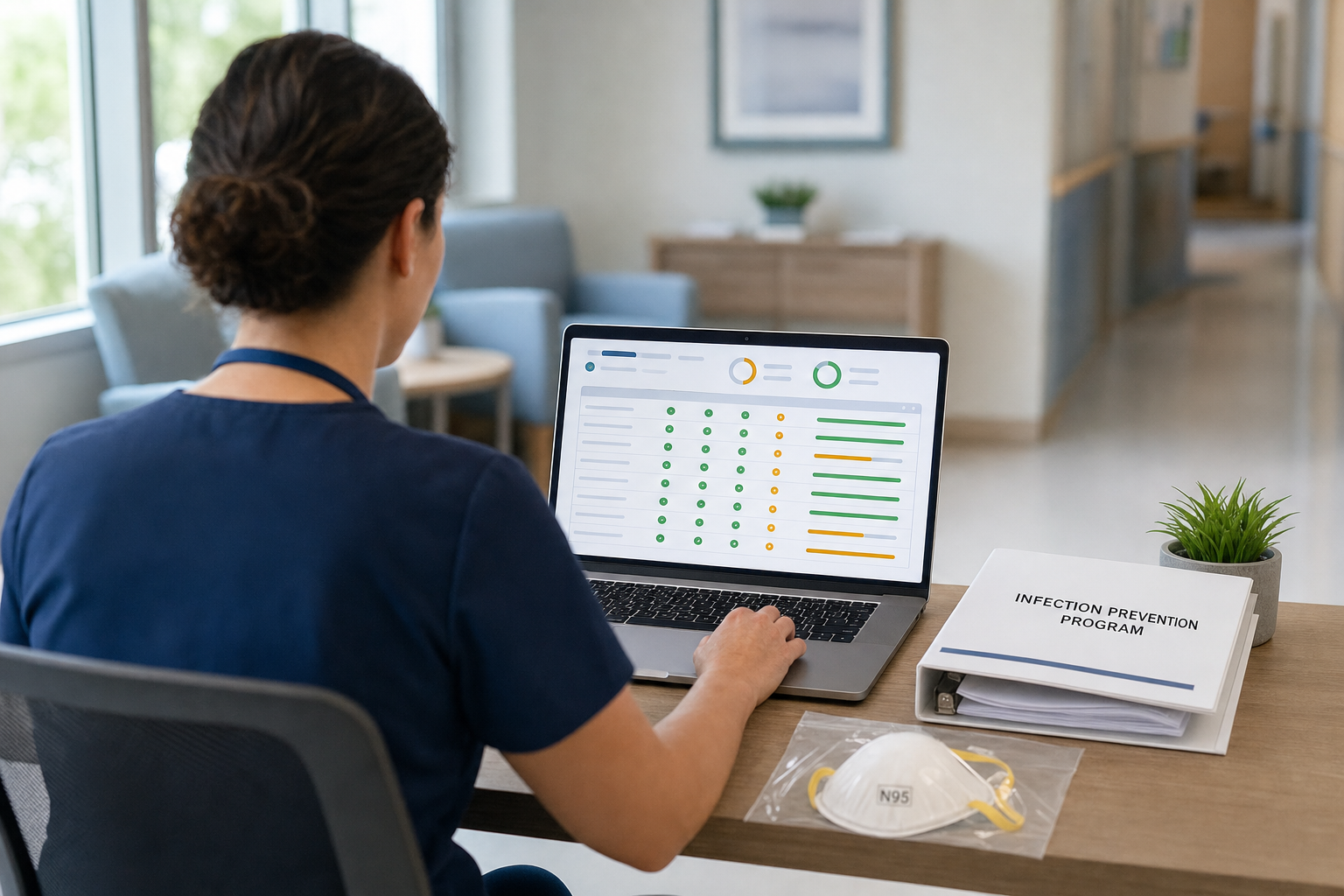
When a state survey team arrives, infection prevention and control gets its own review, and F880 is the tag that carries it. The regulation behind F880 is 42 CFR 483.80, which requires every certified nursing facility to run an infection prevention and control program with written standards, policies, and procedures, including standard and transmission-based precautions, and to designate a qualified infection preventionist (42 CFR 483.80(a)(2)(iii) and (b)).
Respiratory protection sits inside that program. The moment your policy puts a resident on airborne precautions and sends staff in wearing N95s, two rulebooks apply at once: CMS reviews the precaution itself, and OSHA's 29 CFR 1910.134 governs the respirator on the caregiver's face. This checklist covers the OSHA side, because that is where nursing homes most often cannot produce the record.
What the surveyor is looking at
Under F880, surveyors review the written IPCP, observe practice on the floor, and interview staff. For airborne precautions they can reasonably ask: Which staff enter the room? What do they wear? Are those respirators fit tested? Who is responsible for the program? A facility that answers with a binder from two years ago has a problem. A facility that pulls up the clearance, the fit test, and the training date for the CNA who was in the room this morning does not.
OSHA is the enforcement body for the respirator requirements themselves, and Respiratory Protection was the fourth most cited OSHA standard in fiscal year 2024 (OSHA Top 10). A survey finding and an OSHA citation are separate events, but they draw on the same records.
How to pass the CMS infection control survey on respiratory protection: the checklist
Work through this per building. Most items should be answerable from one screen.
Program
- A written respiratory protection program exists and names a program administrator (1910.134(c)(1)).
- The program administrator is identified in the IPCP, and the infection preventionist knows who it is.
- Policy states when N95 use is required (airborne precautions, outbreak protocol, aerosol-generating procedures) versus voluntary.
- Appendix D information is on file for any staff who wear N95s voluntarily (1910.134(c)(2)).
Medical clearance
- Every staff member who could be required to wear an N95 has a completed medical evaluation questionnaire and a PLHCP's written recommendation on file (1910.134(e)(1)).
- The clearance date is earlier than the fit test date for every person.
- Clearances for new hires are completed during onboarding, before the first fit test.
- Re-evaluation triggers are defined: reported symptoms, PLHCP recommendation, program observations, change in workplace conditions (1910.134(e)(7)).
Fit testing
- Every required N95 wearer has a fit test dated within the past 12 months (1910.134(f)(2)).
- The fit test record names the exact make, model, style, and size, and that respirator is the one in supply.
- A process exists to re-test after a change in physical condition that could affect fit (1910.134(f)(3)).
- Agency and temporary staff are covered: either fit tested on arrival or a current record for the same respirator is on file, with a clearance dated before it.
Training
- Training occurred before first required use and at least annually (1910.134(k)).
- Training records show date and content (why the respirator is needed, limitations, how to put it on and check the seal, maintenance).
Records
- Medical evaluation records are retained for the length of employment plus 30 years (1910.134(m)(1), 1910.1020).
- Fit test records are retained until the next fit test (1910.134(m)(2)).
- Records for staff who have left are still retrievable.
- Records for every building are available from one place, and a per-employee file can be produced on request.
Renewal
- Annual fit test and training renewals are scheduled and tracked, not remembered.
- A dashboard or report shows who is current, who is due, and who is missing, per building.
Where nursing homes usually fail this checklist
- The clearance came after the fit test, or not at all. Fit testing gets done in a group session. The medical evaluation is the step that requires a clinician, so it slips. A fit test with no preceding clearance is out of sequence under the standard.
- The N95 on the shelf is not the N95 on the record. Supply chains change models. A fit test for a model the building no longer stocks is not a valid fit test for the one it does.
- Turnover outran the program. Mean annual turnover for nursing staff in U.S. nursing homes was about 128% in a national payroll study (Health Affairs, March 2021). An annual fit test day cannot keep pace with that. Clearance and fit testing have to be part of onboarding.
- The records left with the person who kept them. A departed nurse manager's spreadsheet is not a retention system.
How VestMed supports survey readiness
Compliance dashboards built for infection preventionists are the part of VestMed that matters most on survey day: who is current, who is due, and who is missing, per building. Behind the dashboard, VestMed handles the medical clearance step online and stores the records. A caregiver completes the OSHA questionnaire on any device, a PLHCP reviews it, and the written clearance returns in about 20 minutes on average, 24/7, so new hires and surge staff are cleared before the fit test rather than after. Fit test records for N95 and elastomeric respirators sit beside the clearance with 30-year digital retention. The file a surveyor asks for takes under a minute to pull. VestMed's clearance process fulfills the medical evaluation requirement in 29 CFR 1910.134(e). It does not replace your IPCP or your survey preparation; it makes the respiratory protection part of it producible on demand.
Sources
- 42 CFR 483.80, Infection control (eCFR, current)
- 29 CFR 1910.134, Respiratory Protection (eCFR, current)
- 29 CFR 1910.1020, Access to employee exposure and medical records
- OSHA Top 10 Most Frequently Cited Standards, FY2024
- Health Affairs, March 2021, nursing home staff turnover (UCLA CHPR summary)
- CMS, State Operations Manual Appendix PP surveyor training on infection control (F880)
This page provides general information and is not a substitute for professional or legal advice.
See how senior living operators run clearance and records in one place
VestMed handles online medical clearance, PLHCP review, and fit test record storage, with compliance dashboards that show who is current, due, and missing per building.
See the senior living workflow or read about fit test record storage.
Frequently asked questions
Does CMS require fit testing?
What is F880?
Does this apply to assisted living?
How long do we keep fit test records?
We have twelve buildings. Do we need twelve programs?
Related reading
- Fit Testing
N95 Fit Testing Requirements for Nursing Homes and Senior Living Staff
What OSHA requires before a caregiver wears an N95: medical clearance, then fit testing before first use and annually. A plain guide for nursing homes.
- Fit Testing
Where to Get an N95 Fit Test for Care Staff: Onsite, Mobile, or Clinic (and What Has to Happen First)
Searching "N95 fit test near me" for your care staff? Compare onsite, mobile, and clinic fit testing, and see the medical clearance step that has to come first.
- Industry Guides
Respirator Clearance for Senior Living: A Compliance Guide for Elder Care Operators
Senior living caregivers who wear N95s need documented respirator clearance before fit testing. Learn what OSHA requires and how to prepare records for surveys.
- OSHA Compliance
Record Retention: What to Keep and For How Long
Which respiratory protection records OSHA requires you to keep, how long to retain MEQs and fit test records, and how to stay audit-ready.
- Tools & Templates
Respiratory Protection Program Template
A respiratory protection program template aligned to OSHA 1910.134, with sections for hazard assessment, medical clearance, fit testing, and records.
- Tools & Templates
Fit Test Record Tracker Spreadsheet
A downloadable fit test record tracker to log respirator fit tests, due dates, and results, and keep your FTR documentation audit-ready.