
OSHA Compliance
OSHA Silica Standard: A Complete Compliance Guide for Employers
 Kevin Rittger, MD, FACEP, Founder and Medical DirectorUpdated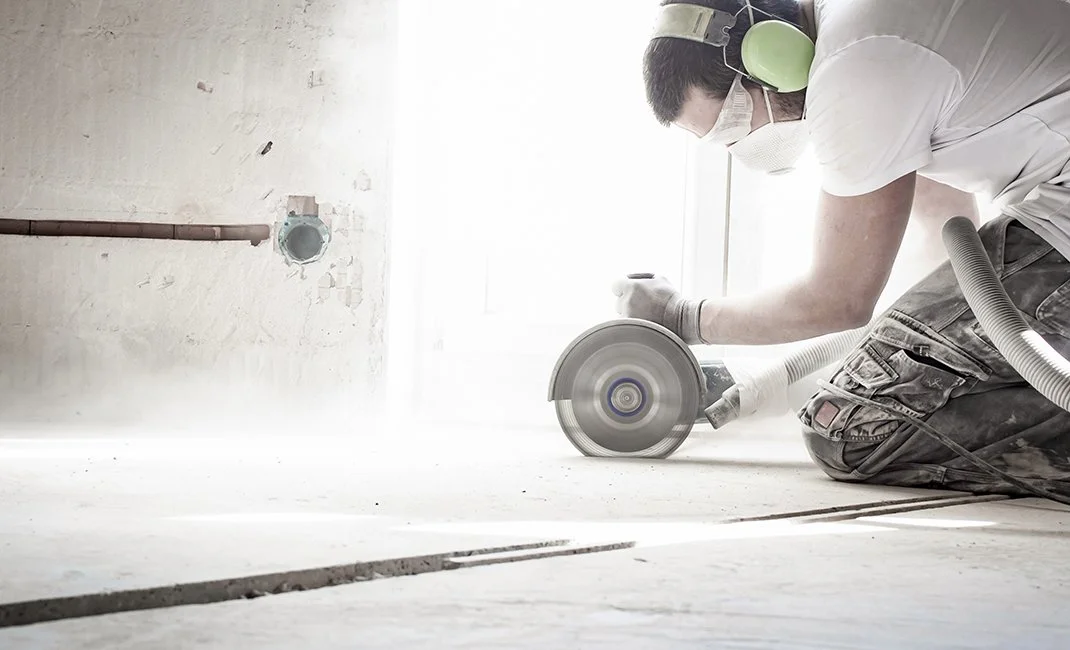
OSHA's respirable crystalline silica standard requires employers to keep worker exposure at or below 50 micrograms per cubic meter of air (50 ug/m3) as an 8-hour time-weighted average. The standard applies across construction, general industry, and maritime, and triggers exposure assessment, engineering controls, respiratory protection, medical surveillance, and recordkeeping obligations.
Key Requirement. Employers must keep worker exposure to respirable crystalline silica at or below the OSHA Permissible Exposure Limit (PEL) of 50 ug/m3 over an 8-hour TWA. When engineering and work-practice controls cannot achieve the PEL, a written respiratory protection program is required under 29 CFR 1910.134.
Key Takeaways
- The OSHA silica PEL is 50 ug/m3 as an 8-hour TWA. The Action Level is 25 ug/m3.
- Exposure at or above the Action Level triggers a written exposure control plan, periodic monitoring, and medical surveillance for any worker exposed 30 or more days per year.
- Construction employers can follow Table 1 of 29 CFR 1926.1153 to comply for 18 listed tasks without exposure monitoring, provided the listed controls and respiratory protection are used.
- Respirators are a last-resort control. Engineering and work-practice controls must be tried first.
- All respirator users must be medically cleared by a PLHCP under 29 CFR 1910.134(e) before fit testing or use.
What is respirable crystalline silica?
Crystalline silica is a common mineral found in stone, artificial stone, granite, concrete, mortar, sand, and many manufactured products. When workers cut, grind, drill, mill, or otherwise disturb silica-containing materials, microscopic particles become airborne. Particles small enough to reach the deep lung are called respirable crystalline silica.
Prolonged inhalation can cause silicosis, lung cancer, COPD, and kidney disease.
Who is covered by the standard?
General industry tasks with frequent silica exposure
- Manufacture of glass, pottery, ceramic, brick, concrete, asphalt roofing, jewelry, artificial stone, dental, porcelain, or structural clay products
- Use of industrial sand in foundry work and hydraulic fracturing
- Use of sand for abrasive blasting
Construction tasks with frequent silica exposure
- Using masonry saws, grinders, drills, jackhammers, and handheld powered chipping tools
- Operating vehicle-mounted drilling rigs, crushing machines, and milling equipment
- Demolition, abrasive blasting, and tunneling operations
How do you assess employee exposure?
The most objective approach is to retain a Certified Industrial Hygienist (CIH) to conduct breathing-zone air monitoring on representative workers.
| Exposure result | Action required |
|---|---|
| Below Action Level (under 25 ug/m3) | Discontinue monitoring as long as conditions do not change |
| At or above Action Level, below PEL (25 to 49 ug/m3) | Implement controls, repeat monitoring within 6 months, offer medical surveillance |
| At or above PEL (50 ug/m3 and above) | Implement controls to reduce exposure, provide respiratory protection, offer medical surveillance |
Written exposure control plan
If any worker is exposed at or above the Action Level, the employer must establish a written exposure control plan identifying covered tasks, controls used, restricted access procedures, and a designated competent person.
Medical surveillance
- Initial medical exam within 30 days of assignment
- Periodic exams at least every three years
- Components include respiratory questionnaire, chest X-ray read by B Reader, spirometry, TB test if indicated
- Provided at no cost to the worker
How to protect your employees
Engineering and work-practice controls
| Control | Example application |
|---|---|
| Wet methods | Walk-behind concrete saw with integrated water feed |
| Local exhaust ventilation (LEV) | Abrasive-blast cabinet with LEV |
| Enclosure and isolation | Conveyor-based blasting system |
| Substitution | Non-silica blast media where feasible |
Respiratory protection
When engineering controls cannot bring exposure to the PEL, employers must implement a respiratory protection program under 29 CFR 1910.134 including PLHCP medical clearance, fit testing, training, and recordkeeping.
What is Table 1 in the Construction Standard?
Table 1 of 29 CFR 1926.1153 lists 18 common construction tasks paired with specified engineering controls, work-practice controls, and respiratory protection. Employers who strictly follow Table 1 comply without conducting exposure monitoring. Following Table 1 does not exempt the employer from medical clearance, fit testing, training, and recordkeeping.
Implementation Best Practices
| Step | What to do |
|---|---|
| 1. Assign a program administrator | One person owns silica compliance |
| 2. Conduct the exposure assessment | CIH air sampling, or Table 1 documentation |
| 3. Build the written exposure control plan | Tasks, controls, restricted-access procedures |
| 4. Implement engineering controls first | Wet methods, LEV, enclosure, substitution |
| 5. Clear and fit-test every respirator user | Medical clearance under 1910.134(e) |
| 6. Train annually and document it | Health effects, exposure sources, controls |
| 7. Offer medical surveillance every three years | For workers at or above Action Level for 30+ days/year |
| 8. Keep records | Exposure data, medical surveillance, training, fit tests |
Frequently Asked Questions
Q: What is the OSHA PEL for respirable crystalline silica?
A: 50 micrograms per cubic meter of air as an 8-hour TWA. The Action Level is 25 ug/m3.
Q: What is Table 1 in the silica construction standard?
A: Table 1 lists 18 construction tasks with specified controls. Employers who strictly follow Table 1 comply without exposure monitoring. Other RPP requirements still apply.
Q: Do my workers need medical clearance to wear a respirator for silica work?
A: Yes. 29 CFR 1910.134(e) requires PLHCP medical clearance before fit testing or use.
Q: How often is silica medical surveillance required?
A: At least every three years for workers exposed at or above the Action Level for 30 or more days per year.
Sources
- 29 CFR 1910.1053 - Respirable Crystalline Silica (General Industry)
- 29 CFR 1926.1153 - Respirable Crystalline Silica (Construction)
- OSHA Silica Crystalline Topic Page
The information on this page is meant to be informative and is not a substitute for professional or legal advice.
Ready to streamline respirator clearance for your workforce?
VestMed delivers 100% online digital respirator clearance, reviewed by our PLHCPs and audit-ready under 29 CFR 1910.134. No monthly fees. Pay only for clearances completed.
Get a Quote or call 844-837-8767 to speak with a VestMed representative.
Related reading
- OSHA Compliance
How to Conduct a Respiratory Hazard Assessment
Step-by-step guide to evaluating workplace respiratory hazards: identify exposures, conduct air sampling, document the assessment, and select respirators.
- Respirator Selection
How to Develop an OSHA-Compliant Respiratory Protection Program
Step-by-step guide to a written respiratory protection program under 29 CFR 1910.134: program elements, respirator selection, medical clearance, fit testing.
- Training Materials
Respiratory Protection Training: An OSHA Compliance Guide
OSHA respiratory protection training requirements explained: required topics, frequency, retraining triggers, recordkeeping, and practical delivery methods.
Kevin Rittger
MD, FACEP, Founder and Medical Director