
OSHA Compliance
Why Proactive Respiratory Hazard Assessments Save Money and Lives
 Kevin Rittger, MD, FACEP, Founder and Medical DirectorUpdated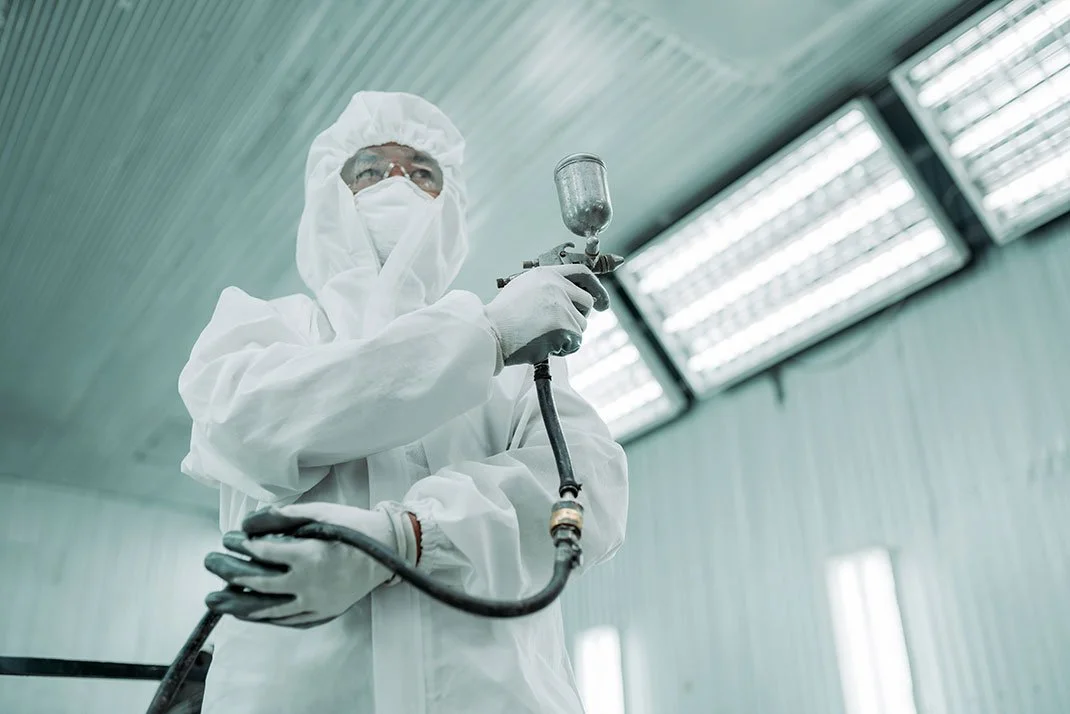
OSHA's General Duty Clause requires employers to provide a workplace free from recognized hazards likely to cause death or serious physical harm. The PPE standard at 29 CFR 1910.132 reinforces the obligation by requiring proactive workplace evaluation. Employers who run respiratory hazard assessments before work begins consistently lower citation exposure, avoid lost work, and protect workers from preventable injury.
Best Practice. A proactive hazard assessment identifies respiratory risks before exposure occurs, allowing engineering and administrative controls to be specified and workers to be cleared in advance of work assignment.
Key Takeaways
- The General Duty Clause and 29 CFR 1910.132 both push assessment before work starts, not after.
- Reactive assessments lead to rush MEQs, rush fit testing, premium pricing, OSHA citations, and lost bids.
- Three documented patterns show the cost gap: pandemic-era senior living facilities, demolition subcontractors hit with silica, and powder-coating in-house transitions.
- Indirect costs of an employee injury run roughly 4x the direct costs (NSC).
- Proactive employers build PPE and clearance costs into bids and budgets, demonstrating safety commitment to clients and workers.
Why be proactive?
A comprehensive job-task analysis gives the business a clearer picture of the hazards workers will face and the operational realities of how the work gets done. The process often surfaces process inefficiencies, unsafe practices, and budgeting gaps for PPE, medical clearance, and training. Employers who plan ahead avoid scrambling later, and they avoid paying premium prices for rushed clearance, fit testing, and OSHA-mandated corrections.
How proactive planning affects budget
Example 1: pandemic-era senior living
At the start of the COVID-19 pandemic, many long-term care, senior living, and hospice facilities had not classified airborne infectious disease as a workplace respiratory hazard. When the virus reached residents, care teams were directly exposed. Employers had to run rush medical evaluations, pay premium rates for emergency fit testing, and some were cited heavily by OSHA for failing to protect workers. Most of this could have been classified during an earlier hazard assessment, since SARS, influenza, and tuberculosis were already recognized airborne hazards that warranted respiratory protection.
Example 2: demolition subcontractor
A construction sub bid a job that required removing and replacing 10,000 yards of concrete. The crew had never done demolition at that scale and didn't know silica was a likely exposure. Once the job started and workers complained about dust, the General Contractor asked for the Job Hazard Analysis. The sub had none. The sub then had to stand up a silica program mid-project, costs that could have been built into the bid up front. See our OSHA silica standard guide.
Example 3: in-house powder coating
A truck bed manufacturer brought powder coating in-house. The electrostatic process exposes workers to airborne dust. A proactive assessment determined dust could not be fully controlled and that respirators were required. The team built PPE cost, annual MEQs, and fit testing into the per-unit price before launch. No rush. No surprise.
The cost of not being proactive
| Cost driver | What happens when you skip the assessment |
|---|---|
| OSHA inspections and violations | Citations are public on the OSHA Establishment Search; penalty amounts published at osha.gov/penalties |
| Lost work | General Contractors often require a written RPP; subs without one lose bids |
| Employee injuries | Direct medical costs plus indirect costs (retraining, hiring, productivity loss) typically running ~4x direct cost (NSC data) |
| Lower morale | Workers notice when leadership treats safety as an afterthought |
How being proactive demonstrates commitment
When leaders treat the hazard assessment as a planning input and not a citation response, workers notice. Providing structured training on PPE and respirator use, running MEQs and fit testing on a regular cadence, and including safety costs as line items in bids all signal the same message: the company is set up to send people home safely every day.
Next steps
- Risk assessments. Conduct a risk assessment of all job tasks and every new task before workers begin. See how to conduct a respiratory hazard assessment.
- Employee job and safety training. Annual training is required under 29 CFR 1910.134(k). See respiratory protection training requirements.
- Ongoing OSHA compliance reviews. Schedule mock OSHA compliance reviews to surface gaps before an inspector does.
Conclusion
Benjamin Franklin's "if you fail to plan, you are planning to fail" lands hard in respiratory protection. The hazards are not always visible, but the regulatory and operational consequences of missing them are. A proactive assessment, a written RPP, and PLHCP medical clearance for every respirator user are the three commitments that pay back the fastest. VestMed handles the clearance side of that program through 100% online digital MEQs reviewed by our PLHCPs, with audit-ready records.
Frequently Asked Questions
Q: What does "proactive" mean in the context of OSHA hazard assessment?
A: Conducting the hazard assessment before workers begin the job, not after a citation, an incident, or a complaint. Proactive assessments allow engineering and administrative controls to be specified and respirator users to be cleared in advance of work assignment.
Q: What is the real cost of skipping a hazard assessment?
A: OSHA citation exposure (publicly searchable and significant in dollar terms), lost bids when General Contractors require a written RPP, rush rates for emergency MEQs and fit testing, and the indirect cost of injuries that run roughly 4x direct medical cost.
Q: How often should we run a hazard assessment?
A: At least annually as part of the RPP review, and every time a new chemical, process, or piece of equipment is introduced. New tasks must be assessed before workers begin.
Q: Does a proactive assessment require a Certified Industrial Hygienist?
A: For objective measurement of exposure, a CIH or the OSHA On-Site Consultation Program is the strongest path. For task-level walkthroughs and JHAs, a trained safety professional may be sufficient.
Q: How does proactive planning affect bidding for construction work?
A: Many General Contractors require a written respiratory protection program and supporting documentation as a condition of award. Subs who build PPE, MEQ, and fit-testing costs into the bid both protect workers and demonstrate program maturity.
Sources
- OSHA General Duty Clause, Section 5(a)(1)
- 29 CFR 1910.132 - General Requirements for PPE
- 29 CFR 1910.134 - Respiratory Protection
- OSHA Penalties
- OSHA Establishment Search
- NSC Injury Facts - Costs
The information on this page is meant to be informative and is not a substitute for professional or legal advice.
Ready to streamline respirator clearance for your workforce?
VestMed delivers 100% online digital respirator clearance, reviewed by our PLHCPs and audit-ready under 29 CFR 1910.134. No monthly fees. Pay only for clearances completed.
Get a Quote or call 844-837-8767 to speak with a VestMed representative.
Related reading
- OSHA Compliance
How to Conduct a Respiratory Hazard Assessment
Step-by-step guide to evaluating workplace respiratory hazards: identify exposures, conduct air sampling, document the assessment, and select respirators.
- Respirator Selection
How to Develop an OSHA-Compliant Respiratory Protection Program
Step-by-step guide to a written respiratory protection program under 29 CFR 1910.134: program elements, respirator selection, medical clearance, fit testing.
- Training Materials
Respiratory Protection Training: An OSHA Compliance Guide
OSHA respiratory protection training requirements explained: required topics, frequency, retraining triggers, recordkeeping, and practical delivery methods.
Kevin Rittger
MD, FACEP, Founder and Medical Director