
Fit Testing
Qualitative Respirator Fit Testing (QLFT): A Complete Guide
 Kevin Rittger, MD, FACEP, Founder and Medical DirectorUpdated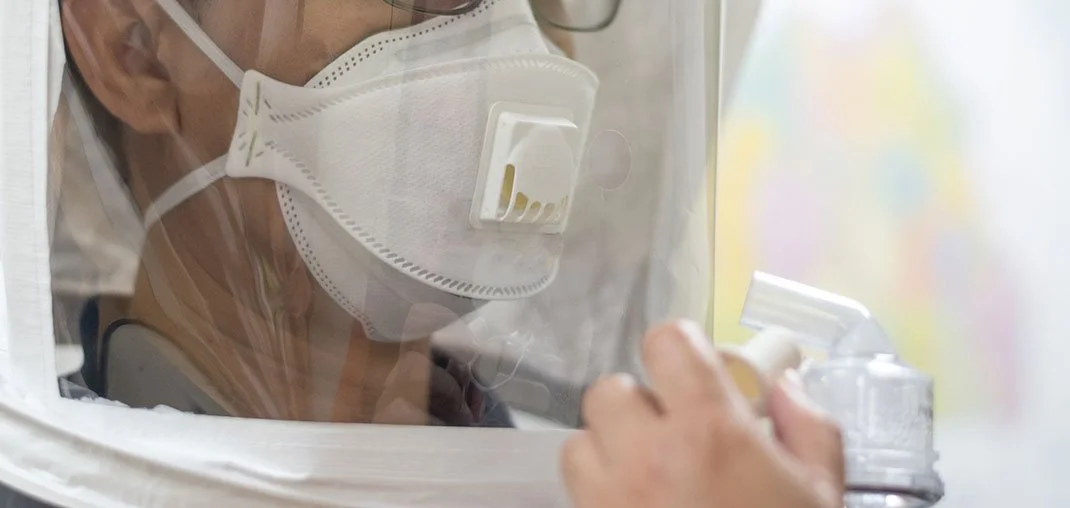
Qualitative Fit Testing (QLFT) is an OSHA-approved pass/fail fit-test protocol that relies on the worker's sense of taste, smell, or response to an irritant. QLFT may be used for tight-fitting negative-pressure air-purifying respirators that require a fit factor of 100 or less, including N95s and half-mask elastomerics. Reference: 29 CFR 1910.134 Appendix A.
Key Requirement. QLFT may only be used to fit-test negative-pressure air-purifying respirators that achieve a fit factor of 100 or less. Assigned Protection Factor (APF) 10 only. Reference: 29 CFR 1910.134 Appendix A.
Key Takeaways
- QLFT is pass/fail based on the worker's sensory response.
- QLFT is limited to respirators with a required fit factor of 100 or less (APF 10).
- Four OSHA-approved QLFT agents: isoamyl acetate, saccharin, Bitrex, irritant smoke.
- QLFT is non-destructive and lower cost than QNFT, making it preferred during N95 shortages.
- PLHCP medical clearance under 29 CFR 1910.134(e) is a prerequisite to QLFT.
What is QLFT?
OSHA defines a qualitative fit test as a pass/fail test that relies on the worker's response to a test agent. The protocol confirms whether the respirator forms an adequate seal, without measuring the precise amount of leakage. The four OSHA-approved QLFT agents:
| Agent | Sensory cue |
|---|---|
| Isoamyl acetate | Banana odor |
| Saccharin | Sweet taste |
| Bitrex | Bitter taste |
| Irritant smoke | Cough response |
The Saccharin and Bitrex methods are most common in practice.
Key terms
Air-purifying respirator (APR): A respirator that purifies the air by passing ambient air through a filter, cartridge, or canister.
Negative-pressure respirator: A respirator in which air pressure inside the facepiece is negative during inhalation relative to ambient air pressure.
Positive-pressure respirator: A respirator in which pressure inside the facepiece exceeds ambient air pressure.
Assigned Protection Factor (APF): A measure of how much protection a properly used respirator provides. An APF of 10 means no more than 10% of contaminants will leak in. An APF of 100 means no more than 1%.
Fit Factor: A numeric measurement of the fit of a specific respirator to a specific individual, calculated by fit-testing equipment.
Prerequisites for QLFT
Every worker who participates in QLFT must have completed a PLHCP-reviewed Medical Evaluation Questionnaire under 29 CFR 1910.134(e) before the test. This protects the worker from the physiologic burden of wearing a respirator they may not be cleared for. VestMed handles MEQs 100% online with PLHCP review.
When QLFT applies
QLFT may be used to fit-test:
- All tight-fitting positive-pressure respirators
- Tight-fitting negative-pressure air-purifying respirators that require a fit factor of 100 or less
QLFT may not be used for negative-pressure air-purifying respirators when potential exposure exceeds 10 times the PEL of the contaminant. In practice this means QLFT is fine for N95 and half-mask elastomeric at lower hazard ratios; it is not adequate for full-face APRs that require a fit factor of 500.
Examples
- A hospital fit-tests nursing staff for N95 respirators against TB and COVID-19 exposure. QLFT is adequate since the required fit factor is 100.
- The same hospital fit-tests pharmacy staff for full-face respirators against chemotherapy spills. The required fit factor is 500, so QNFT is required.
- A construction company fit-tests concrete cutters in half-face respirators against silica dust. QLFT is adequate.
- The same company fit-tests stainless steel welders in full-face respirators against hexavalent chromium. QNFT is required.
Equipment needed
A QLFT kit typically includes:
- Hood
- Collar
- Nebulizer
- Sensitivity solution and test solution
- Instructions
Manufacturers including Allegro and 3M produce kits with detailed instructions. Follow the OSHA-required minimum protocols at all times.
Where to find step-by-step instructions
The required minimum protocols are published in 29 CFR 1910.134 Appendix A. Manufacturer training videos are widely available, including on YouTube.
Trainer certification
OSHA does not require a specific certification for the fit tester. The standard does require the employer to designate a program administrator qualified by training or experience commensurate with program complexity. Reference: 29 CFR 1910.134(c)(3).
What if a worker fails a QLFT?
Common reasons a worker fails a QLFT:
- Wrong size selected
- The mask brand or model does not fit the worker's face
- Facial hair or facial features that interfere with the seal
- Damaged respirator
- Worker did not follow test instructions
- Fit tester procedural error
- Worker cannot detect the test agent (Bitrex or saccharin)
A failure does not disqualify the worker from respirator use. Re-check size, offer an alternative make or model, or switch to a QNFT protocol if appropriate. OSHA requires the employer to provide a sufficient number of respirator models and sizes so that the respirator is acceptable and correctly fits the user.
What other fit-test options exist?
If QLFT is not appropriate or the worker cannot detect the test agent, use a QNFT protocol. QNFT is objective, numeric, and can be used for any tight-fitting respirator. See the QNFT guide.
Recordkeeping
Every QLFT record must include:
- Worker name or identifier
- Type of fit test performed
- Specific make, model, style, and size of respirator
- Date of the test
- Pass/fail result
Records must be retained until the next fit test, at minimum.
Implementation Best Practices
| Step | What to do |
|---|---|
| 1. Clear every wearer through a PLHCP MEQ | Required before any fit test |
| 2. Confirm QLFT applies | Required fit factor 100 or less |
| 3. Use OSHA-approved agents and protocols | Saccharin, Bitrex, isoamyl acetate, irritant smoke |
| 4. Train the fit tester | Hands-on course over self-guided video |
| 5. Stock multiple makes and sizes | First failure usually means wrong respirator, not unfit worker |
| 6. Document every test | Worker, respirator make/model/size, date, result |
| 7. Re-fit annually | And on health, job, or respirator change |
| 8. Pair fit testing with annual training | Saves time and reinforces both |
Conclusion
QLFT is the right protocol for the majority of N95 and half-mask elastomeric users in healthcare, construction, and general industry. It is non-destructive, lower cost, and fast to deploy. Pair it with PLHCP medical clearance for every wearer under 29 CFR 1910.134(e). VestMed handles the clearance side of the program through 100% online digital MEQs reviewed by our PLHCPs.
Frequently Asked Questions
Q: When can QLFT be used?
A: QLFT may be used for tight-fitting positive-pressure respirators and for negative-pressure air-purifying respirators that require a fit factor of 100 or less. It may not be used when potential exposure exceeds 10 times the PEL of the contaminant. Reference: 29 CFR 1910.134 Appendix A.
Q: What are the four OSHA-approved QLFT agents?
A: Isoamyl acetate (banana odor), saccharin (sweet taste), Bitrex (bitter taste), and irritant smoke (cough response). Saccharin and Bitrex are most common in practice.
Q: Can QLFT be used to fit-test full-face respirators?
A: QLFT may be used for positive-pressure full-face respirators. For negative-pressure full-face APRs that require a fit factor of 500, QNFT is required because QLFT only validates fit factors up to 100.
Q: Do workers need medical clearance before a QLFT?
A: Yes. 29 CFR 1910.134(e) requires PLHCP medical clearance before any fit test. The PLHCP reviews a Medical Evaluation Questionnaire to determine whether the worker can safely wear a respirator.
Q: What records must we keep for a QLFT?
A: Worker identifier, type of fit test, specific make, model, style, and size of respirator, date of the test, and the pass/fail result. Records must be maintained until the next fit test at minimum.
Sources
- 29 CFR 1910.134 - Respiratory Protection
- 29 CFR 1910.134 Appendix A - Fit Testing Procedures
- OSHA Standard Interpretation: Qualitative Fit Testing Limits (1999)
The information on this page is meant to be informative and is not a substitute for professional or legal advice.
Ready to streamline respirator clearance for your workforce?
VestMed delivers 100% online digital respirator clearance, reviewed by our PLHCPs and audit-ready under 29 CFR 1910.134. No monthly fees. Pay only for clearances completed.
Get a Quote or call 844-837-8767 to speak with a VestMed representative.
Related reading
- Fit Testing
Quantitative Respirator Fit Testing (QNFT): A Complete Guide
OSHA-approved Quantitative Fit Testing (QNFT): PortaCount vs Quantifit, when QNFT is required, recordkeeping, and PLHCP clearance prerequisites.
- Fit Testing
What Is Respirator Fit Testing? A Plain-English OSHA Guide
Plain-English guide to OSHA respirator fit testing: who needs it, how often, qualitative vs quantitative, and PLHCP medical clearance prerequisites.
- OSHA Compliance
The Case for Annual Respirator Medical Evaluation
Why providing annual respirator medical evaluations is a best practice even when not strictly required. Worker health benefits, employer ROI, and OSHA context.
Kevin Rittger
MD, FACEP, Founder and Medical Director