
OSHA Compliance
OSHA Audit Process: The Necessity of Preparation
 Kevin Rittger, MD, FACEP, Founder and Medical DirectorUpdated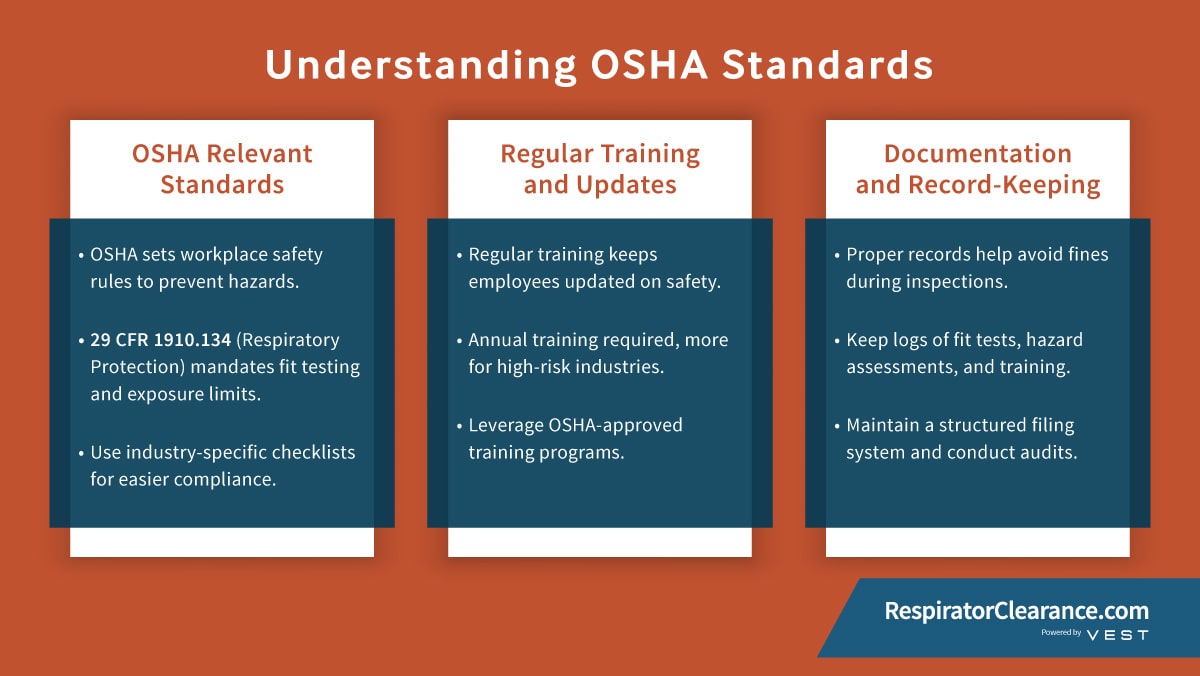
Did you know? In 2016, a shipyard in Wisconsin faced almost $1.4 million in OSHA fines for exposing workers to lead levels that were up to 20 times the permissible limit. This fine shows why OSHA audit preparation is so important, especially for keeping respiratory safety programs compliant.
Preparation is not just about checking off tasks. It is about making a safe place for workers. This way, we ensure that we are ready for audits and that compliance is always a priority.
Making sure we have good respiratory protection programs and keeping records updated helps reduce risks. It also shows our commitment to safety.
Many businesses overlook small mistakes, like missing fit-test records or old safety logs. These can lead to expensive violations.
The good news? Avoiding these pitfalls is easier than you think.
By following OSHA regulations, conducting internal audits, and training employees, you can build a compliance strategy that always keeps your workplace inspection-ready.
I. Understanding OSHA Standards
OSHA standards set the foundation for workplace safety. Failing to meet them can result in fines, legal trouble, and, most importantly, endanger employees.
To be ready for an audit, you need to know the rules. This includes respiratory protection, training needs, and record-keeping. Understanding these requirements helps you stay OSHA compliant.
Familiarizing with Relevant Standards
OSHA's 29 CFR 1910.134 is the core regulation for respiratory protection, covering everything from fit testing to air quality standards.
It applies to any industry where workers may be exposed to airborne contaminants. However, the details differ by sector. For example, manufacturing plants have different rules than healthcare settings.
Employers can access official OSHA guidelines through the agency's website, state labor departments, or professional safety organizations.
Interpreting these rules might seem overwhelming, but breaking them down into industry-specific checklists makes compliance much easier.
Regular Training & Updates
Workplace safety isn't a one-time lesson. OSHA requires ongoing training to ensure employees stay informed about new hazards, equipment updates, and compliance changes.
While general OSHA training should be conducted annually, industries with high exposure risks may need more frequent refresher courses.
The best way to stay compliant is to use OSHA-approved resources including certification programs, online courses, and safety drills sponsored by employers.
Keeping training engaging--through interactive sessions or hands-on demonstrations--also improves retention and helps prevent safety violations.
Documentation & Record-Keeping
Proper documentation is what separates compliant businesses from those facing violations. OSHA requires employers to keep detailed records of fit tests, hazard assessments, and employee training logs.
Whether you use digital systems or traditional paperwork, you must update records and keep them readily available for inspectors.
Companies that fail to maintain proper documentation risk fines, even if their workplace is otherwise safe.
II. Conducting Internal Audits
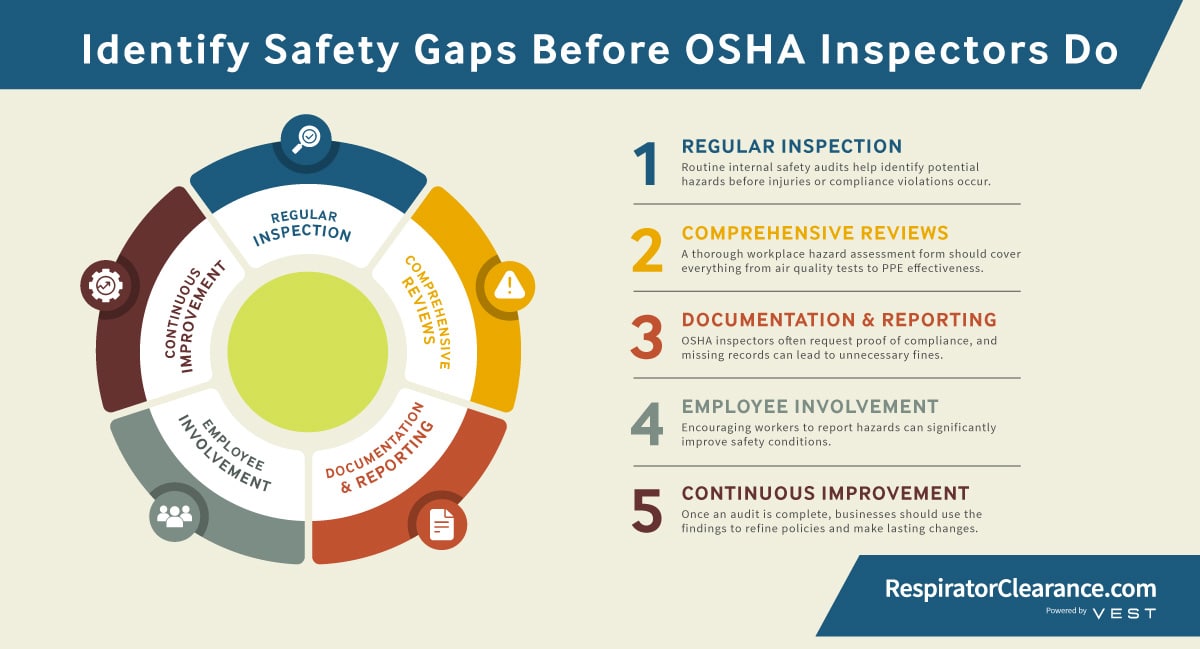
Internal audits identify safety gaps before OSHA inspectors do. A well-planned audit process can prevent violations, improve workplace conditions, and reinforce a strong safety culture.
Regular Inspections: Spotting Issues Before They Become Violations
Routine internal safety audits help identify potential hazards before injuries or compliance violations occur. OSHA recommends conducting quarterly audits for high-risk industries and at least annual audits for lower-risk environments.
Some of the most common red flags include:
- Blocked emergency exits
- Improperly stored hazardous materials
- Lack of respiratory protection enforcement
- Missing or outdated training records
One of the best ways to ensure compliance is by using an internal audit checklist tailored to OSHA standards.
Comprehensive Reviews: Evaluating Workplace Hazards
A thorough workplace hazard assessment should cover everything from air quality tests to PPE (Personal Protective Equipment) effectiveness. Poor ventilation, improper respirator fit, and untested emergency equipment are all factors that could lead to OSHA citations.
To keep respiratory protection in check, companies should regularly inspect:
- Respirator condition and seal integrity
- Filter and cartridge expiration dates
- Storage conditions for respiratory equipment
- Ventilation system functionality
- Air monitoring equipment calibration
Documentation & Reporting: Keeping a Clear Paper Trail
Even the most thorough audits mean nothing if they aren't properly documented. OSHA inspectors often ask for proof of compliance, and missing records can lead to fines.
Key documents to maintain include:
- Internal audit reports with findings and corrective actions
- Employee training attendance logs
- Equipment inspection records
- Incident reports and near-miss documentation
- Corrective action plans with completion dates
Employee Involvement: Encouraging a Speak-Up Culture
Employees are on the front lines of workplace safety and often notice issues before management does. Encouraging workers to report hazards can significantly improve safety conditions.
Ways to promote employee involvement:
- Anonymous reporting systems for safety concerns
- Regular safety committee meetings
- Recognition programs for hazard identification
- Open-door policies for safety discussions
Continuous Improvement Strategies
Internal audits shouldn't just identify problems--they should lead to long-term improvements. Steps to implement:
- Track audit findings over time to identify patterns
- Set measurable safety improvement goals
- Review and update policies based on findings
- Benchmark against industry best practices
- Invest in new safety technology when appropriate
III. Maintaining Documentation
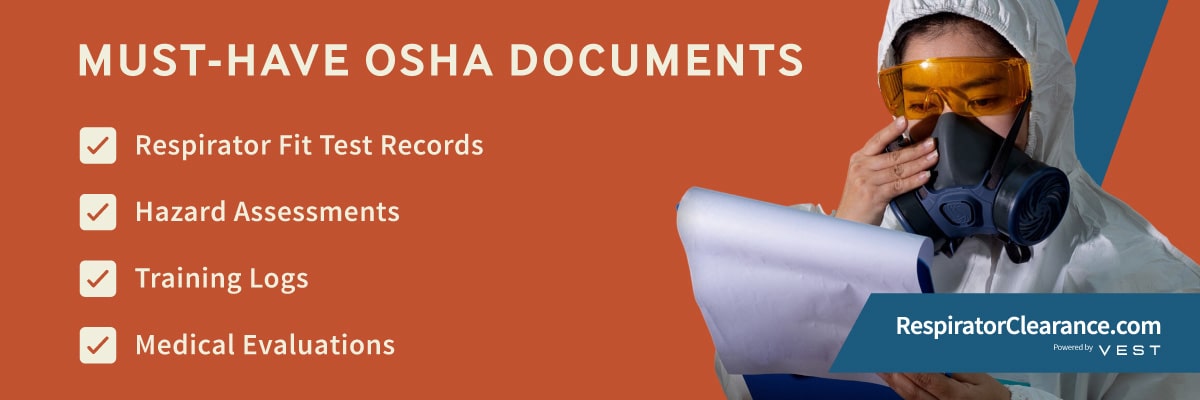
Missing paperwork is one of the easiest ways to get cited during an OSHA audit. Even if a workplace meets safety standards, failing to produce the right records can result in fines.
OSHA Documentation Checklist: What You Need Before an Audit
Every employer should have a set of core documents ready before an inspection:
- Written Respiratory Protection Program
- Medical evaluation records for all respirator users
- Fit test results (initial and annual)
- Training logs with dates, topics, and attendees
- Air quality monitoring reports
- Equipment maintenance and inspection logs
- Incident reports (OSHA 300 Log)
- Hazard communication plan
- PPE hazard assessment certifications
Organizing Fit Tests, Hazard Assessments, and Training Logs
OSHA audits often involve spot-checking documentation. Keeping files in a centralized location prevents delays and confusion. Employers can:
- Use digital compliance management software
- Maintain organized binders by category and date
- Set up automated reminders for expiring records
- Create backup copies of critical documents
Best Tools for Compliance Management
Manual tracking can be overwhelming. Digital compliance tools help:
- Automate record-keeping and alerts
- Centralize documentation in searchable databases
- Generate compliance reports on demand
- Track training completion and certification renewals
- Monitor upcoming fit test and medical evaluation deadlines
IV. Employee Training & Readiness
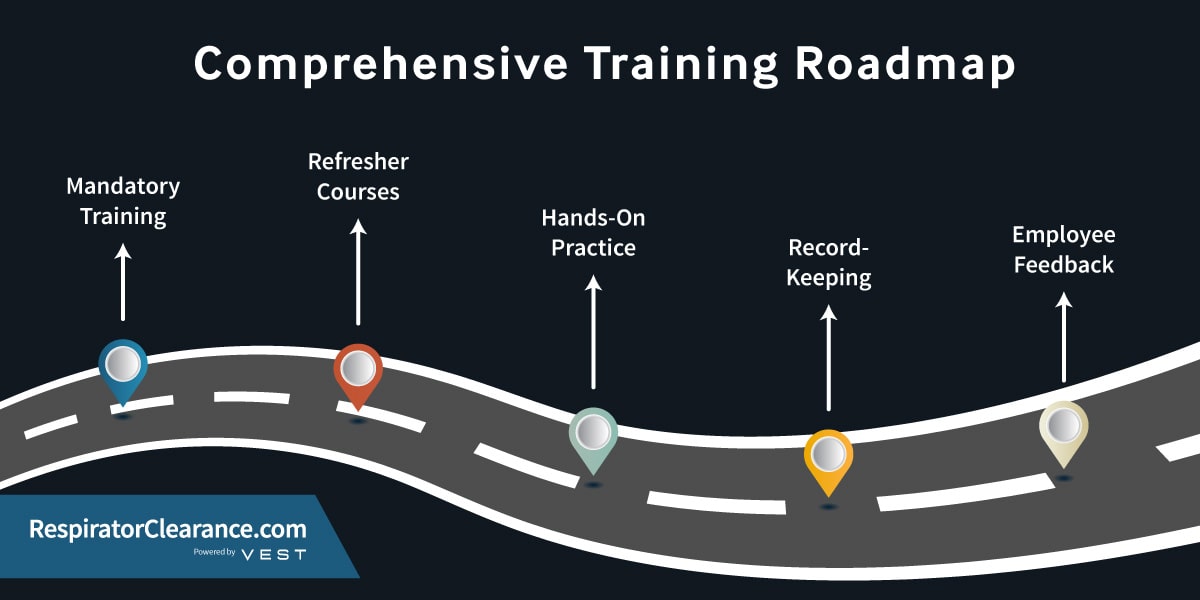
Training is not only about meeting OSHA requirements but about making sure every worker understands the risks and how to protect themselves.
Comprehensive Training Programs
OSHA mandates baseline safety training for all employees, but some industries require more than the standard courses. Workers exposed to hazardous airborne contaminants must be trained under 29 CFR 1910.134, which covers respirator use, fit testing, and medical evaluations.
Many businesses go beyond minimum requirements by implementing:
- Hands-on respirator donning and doffing practice
- Emergency response simulations
- Hazard-specific training modules
- New employee orientation safety programs
Regular Training Sessions: How Often Is Enough?
OSHA requires safety training to be ongoing. Annual training is the general rule, but some industries require more frequent sessions:
- Respirator fit testing must be conducted at least once a year
- Some hazardous materials training may need updates every six months
- New hires must complete training before beginning work with respirators
Hands-On Training: The Best Way to Learn Safety
Practical, hands-on training ensures employees know how to fit, wear, and maintain their safety gear properly. OSHA emphasizes:
- Proper respirator donning and seal check techniques
- Equipment maintenance and inspection procedures
- Emergency procedures and escape routes
- Recognizing signs of overexposure
Training Documentation & Record-Keeping
OSHA requires employers to maintain:
- Employee names, dates, and training topics
- Instructor qualifications and credentials
- Assessment results and competency demonstrations
- Signed acknowledgment forms
V. Designating a Safety Coordinator
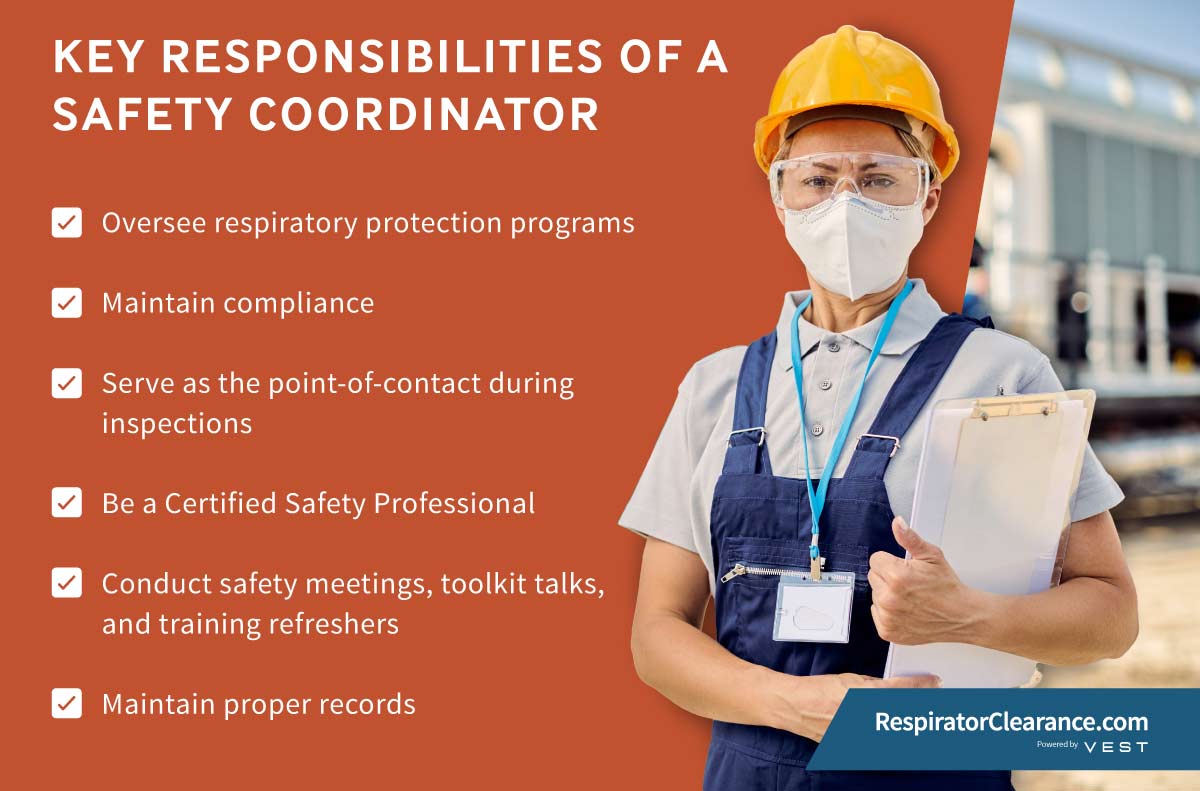
A well-trained workforce is important, but even the best training programs need someone to oversee workplace safety.
Role & Responsibilities
A safety coordinator is responsible for:
- Managing the respiratory protection program
- Conducting and coordinating internal audits
- Maintaining all compliance documentation
- Organizing training sessions
- Serving as OSHA liaison during inspections
- Tracking regulatory updates and implementing changes
Knowledge & Expertise
A strong safety coordinator needs:
- OSHA 30-hour certification or equivalent
- Industry-specific safety knowledge
- Understanding of respiratory protection standards
- Experience with compliance documentation
- Strong communication and training skills
Record-Keeping & Reporting
A safety coordinator must ensure all safety-related data is accurately tracked including:
- Fit test schedules and results
- Medical evaluation tracking
- Training completion records
- Incident reports and corrective actions
- Equipment maintenance logs
VI. Knowing Your Rights as an Employer
When an OSHA inspector arrives, employers have specific rights that protect them during an inspection.
| Employer Right | What It Means | Steps to Take if Not Respected |
|---|---|---|
| Right to Request Credentials | You can ask for an inspector's official OSHA ID before granting access | Do not allow entry until verification is complete. Contact the local OSHA office if the inspector refuses to provide ID |
| Right to Know the Reason for Inspection | Employers have the right to understand why their workplace was selected for an audit | Ask the inspector for a written explanation of the reason for the inspection |
| Right to Accompany the Inspector | A designated representative can be present throughout the inspection to observe and take notes | If an inspector refuses to allow an employer representative, document the refusal and contact OSHA |
| Right to Refuse Entry Without a Warrant | OSHA cannot force entry unless they have a warrant | Politely inform the inspector that a warrant is required. Be aware that refusal may increase scrutiny |
| Right to a Closing Conference | Employers are entitled to a final discussion with the inspector to review findings | If an inspector leaves without providing a summary, follow up with OSHA to request documentation |
Thorough OSHA audit preparation not only helps avoid costly violations but also creates a safer, more compliant workplace. By keeping records up to date, training employees, and conducting internal audits, businesses can stay ahead of potential issues.
When the time comes for an OSHA inspection, a well-prepared team and a solid compliance strategy can turn a stressful inspection process into a smooth, successful outcome.
Don't Risk Violations -- Start Your OSHA Audit Preparation Now
Ensure your business is always audit-ready with VestMed's easy-to-use compliance tools and expert support. Our tailored safety solutions keep your workplace protected and up to standard.
Contact us today for more information or to schedule a consultation.
Related reading
- OSHA Compliance
OSHA Audit Process & Respiratory Compliance Guide
Complete guide to the OSHA audit process for respiratory compliance: preparation, opening conference, walkthrough, documentation review, and closing.
- OSHA Compliance
OSHA Inspection: How to Ace the Documentation Review Process
Master the OSHA documentation review: which documents are required, how to keep them accurate and organized, and how to verify compliance.
- OSHA Compliance
Avoid Violations with OSHA Compliant Respiratory Protection Solutions
How to stay OSHA compliant with respiratory protection: 29 CFR 1910.134 requirements, penalty examples, best practices, and online medical evaluations.
- OSHA Compliance
OSHA Citation: Closing the Loop After the Audit
How to read, respond to, and resolve OSHA citations after an audit: decode citations, correct violations, document abatement, and contest unfair findings.
Kevin Rittger
MD, FACEP, Founder and Medical Director