
OSHA Compliance
OSHA Audit Process & Respiratory Compliance Guide
 Kevin Rittger, MD, FACEP, Founder and Medical DirectorUpdated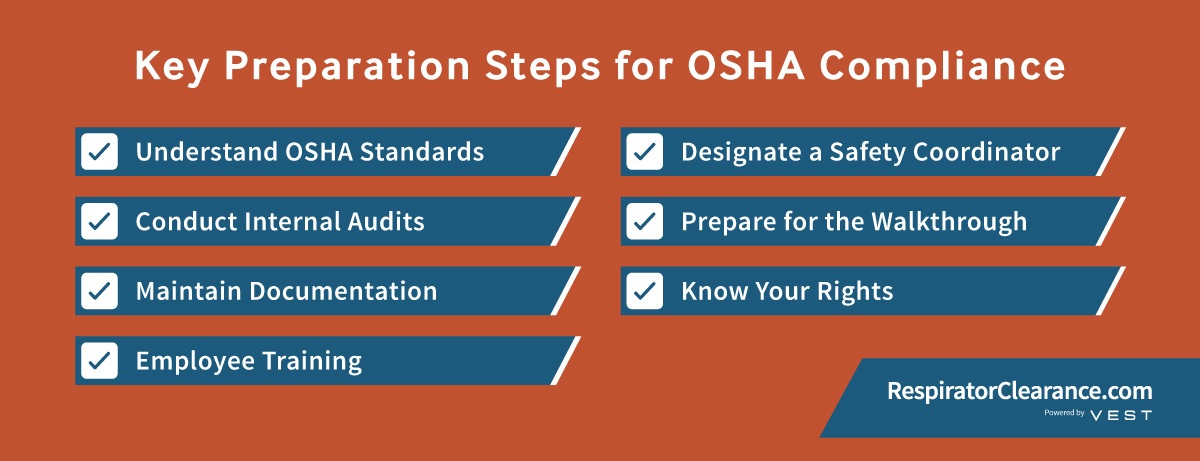
Key Insight: OSHA's Respiratory Protection Standard (29 CFR 1910.134) is one of the most closely monitored regulations for industries dealing with airborne hazards. Failure to comply invites hefty fines and puts workers at serious risk.
Some see OSHA audits as a bureaucratic headache--a checklist of safety rules and penalties waiting to happen. Others recognize them as a critical safeguard, ensuring workplaces remain safe, compliant, and free from preventable hazards.
The truth lies somewhere in between--while the systematic process can feel overwhelming, it serves a purpose that no business can afford to ignore.
OSHA's Respiratory Protection Standard (RPS) 29 CFR 1910.134 is one of the most closely monitored regulations for industries dealing with airborne hazards. Failure to comply doesn't just invite hefty fines or legal trouble--it puts workers at risk, exposing them to serious health concerns that could have been avoided.
An audit isn't just about passing an inspection; it's about proving that your business values safety as much as productivity.
The key to handling an OSHA audit isn't just understanding what's required--it's about being prepared before an inspector ever steps through the door. From knowing the regulations to maintaining up-to-date records, every step plays a role in ensuring a smooth, issue-free review.
Businesses that take a proactive approach don't just reduce their risk of violations; they build a culture of safety that benefits their workforce and long-term operations.
I. Preparation
No business wants to be caught off guard during an OSHA audit. Following key steps in compliance audits allows businesses to ensure that when an inspector arrives, they're ready. Audit Preparation isn't just about having the right documents in place but also building a workplace where safety is second nature.
Understand OSHA Standards
Knowing what OSHA (Occupational Safety and Health Administration) expects is the first step toward compliance. Regulations vary by industry, but one rule applies across the board: businesses must identify workplace safety hazards and implement measures to protect employees. For companies dealing with airborne contaminants, this includes strict adherence to the Respiratory Protection Standard.
Employers should regularly review OSHA's official guidelines, industry updates, and past citations within their sector to stay ahead of potential compliance issues.
Conduct Internal Audits
An internal audit serves as a test run for an official inspection. By proactively assessing workplace safety, businesses can spot risks before they become OSHA violations. These audits should include facility inspections, employee interviews, and a review of training and documentation.
Hazards don't always present themselves as obvious dangers. Something as simple as a poorly stored chemical, an outdated respirator fit test, or improper PPE usage could result in a citation.
Maintain Documentation
OSHA inspectors don't just check the workplace. They also check records that prove compliance. Missing or outdated paperwork can lead to hefty fines, even if a business follows safety procedures correctly.
Key documents to maintain include:
- Written Respiratory Protection Program
- Employee medical evaluation records
- Fit test records (initial and annual)
- Training logs with dates and attendees
- Hazard assessments and air monitoring results
- Equipment inspection and maintenance records
Organizing these records in a centralized, easily accessible system ensures that there's no scrambling to find the necessary paperwork when an audit happens.
Employee Training
A workplace is only as safe as the people working in it. Training employees on OSHA standards, proper equipment use, and emergency procedures is a requirement--not an option.
For respiratory compliance, this means ensuring workers:
- Know how to properly don and doff respirators
- Understand when respiratory protection is required
- Can perform user seal checks before each use
- Know the limitations of their assigned respirator
- Understand maintenance and storage procedures
Training shouldn't be a one-time event. Annual refresher courses and real-world drills help reinforce workplace safety culture and keep employees informed about regulatory updates.
Designate a Safety Coordinator
Having a dedicated point of contact for workplace safety ensures that compliance efforts stay on track. A safety coordinator is responsible for:
- Overseeing the respiratory protection program
- Scheduling and tracking fit tests and medical evaluations
- Maintaining compliance documentation
- Coordinating employee training
- Serving as the point of contact during OSHA inspections
Prepare for the Walkthrough
When an OSHA inspector arrives, they will conduct a walkthrough of the workplace to assess conditions firsthand. Businesses can prevent last-minute panic by conducting their own pre-inspection checks.
Key areas to review:
- PPE storage areas and accessibility
- Ventilation systems and air quality
- Chemical storage and labeling
- Emergency exits and evacuation routes
- Safety signage and hazard communication
Know Your Rights
Many businesses are unaware that OSHA audits come with employer rights. Employers have the right to:
- Request an inspector's credentials before allowing the audit
- Ask for clarification on the scope of the inspection
- Accompany the inspector during the walkthrough
- Receive a closing conference with explanation of findings
- Contest citations through a formal appeals process
II. Opening Conference
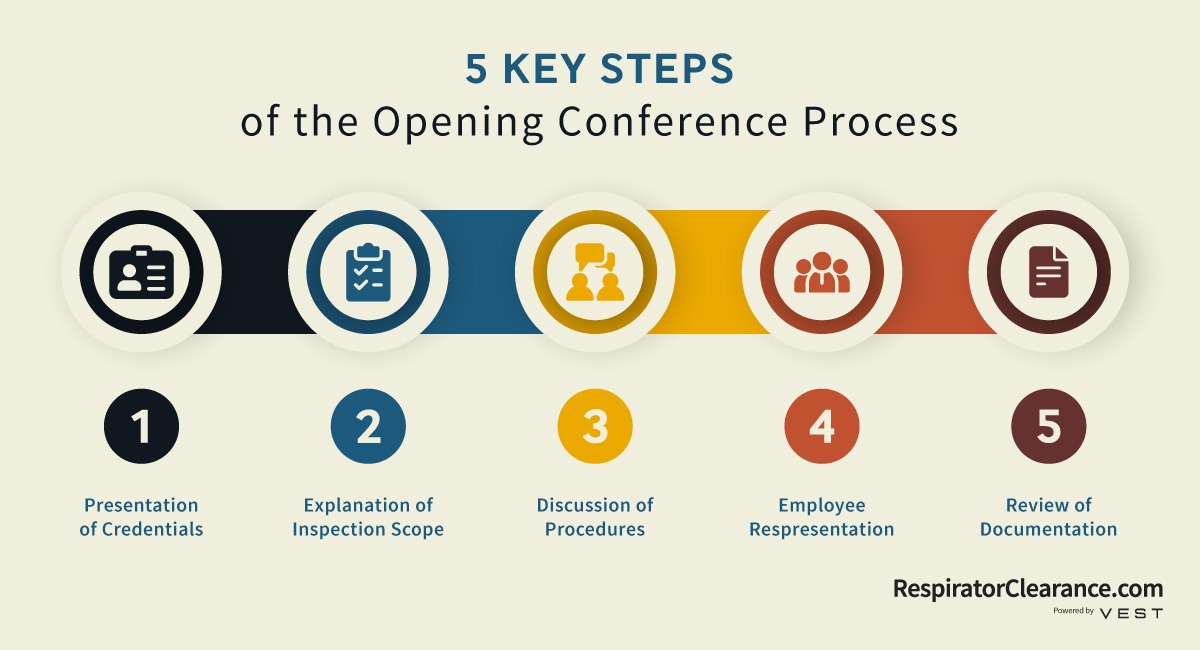
The opening conference is where everything begins. It's the moment when OSHA inspectors lay out the details of the audit, explain what they'll be reviewing, and set expectations for the inspection process.
Presentation of Credentials
Before the audit starts, the inspector is required to present official identification proving their authority to conduct the inspection. Employers have the right to verify these credentials before allowing access to the worksite.
Explanation of Inspection Scope
Once credentials are verified, the inspector will explain why the audit is taking place and what areas will be reviewed. This could be due to a random inspection, an employee complaint, a reported incident, or an industry-wide enforcement initiative.
Discussion of Procedures
The inspector will provide a step-by-step overview of how the audit will proceed, including:
- Which areas of the facility will be inspected
- Whether air sampling or environmental testing will be conducted
- What documentation will be requested
- How employee interviews will be handled
Employee Representation
Workers play a key role in OSHA audits. A designated employee representative--whether a safety committee member, a union representative, or a worker familiar with safety protocols--can accompany the inspector during the walkthrough.
Review of Documentation
Before moving on to the walkthrough, the inspector will typically request specific safety records including training logs, fit test records, medical evaluations, and the written respiratory protection program.
III. Walkthrough
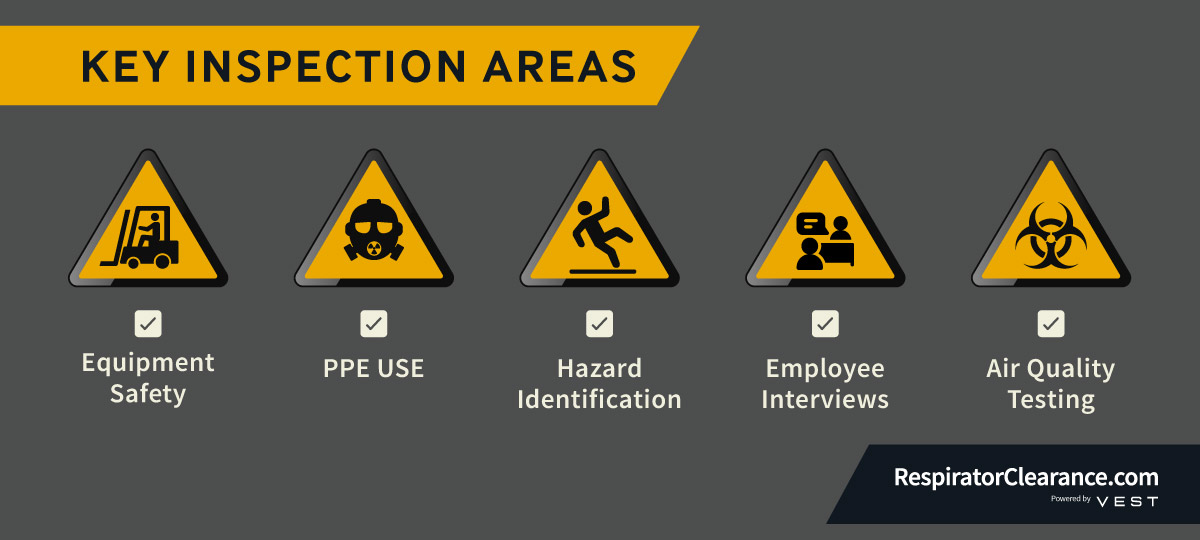
Once the opening conference wraps up, the inspector moves on to the walkthrough--the part of the audit where workplace conditions are assessed in real time.
Defining the Scope
The inspector will outline which areas of the workplace will be reviewed based on the type of inspection--some focus on specific complaints or hazards, while others involve a full safety assessment.
Identifying Hazards
The inspector begins identifying potential risks including:
- Improperly stored chemicals or hazardous materials
- Missing or damaged safety equipment
- Inadequate ventilation or air quality issues
- Unmarked or blocked emergency exits
- Employees working without required PPE
Employee Interviews
The inspector will speak with employees to get a firsthand perspective on workplace conditions. Employees may be asked:
- Do you know where safety equipment is located?
- Have you received training on respiratory protection?
- Have you been fit tested for your respirator?
- Do you know how to report a safety concern?
Sampling and Testing
Depending on the industry and work environment, the inspector may conduct:
- Air quality assessments for harmful dust, fumes, or toxic gases
- Noise level measurements
- Hazardous material sampling
Immediate Corrections
If a serious safety issue is identified during the walkthrough, the inspector may require immediate corrective action such as:
- Shutting down unsafe equipment
- Evacuating affected areas
- Requiring proper PPE be worn immediately
- Isolating a hazardous substance
IV. Documentation Review
An OSHA audit doesn't rely on workplace conditions alone--the records tell their own story.
| Key Area | What OSHA Reviews | Common Issues | Best Practices |
|---|---|---|---|
| Required Documents | Employee medical evaluations, fit-test records, training logs, hazard assessments, PPE maintenance records | Missing or expired records, lack of training logs | Keep a digital or physical archive with labeled folders for quick retrieval |
| Accuracy and Completeness | Dates, signatures, test results, compliance reports, inspection records | Incomplete forms, missing signatures, outdated information | Conduct quarterly audits to ensure all records are up to date |
| Accessibility | Documents should be readily available for OSHA review | Hard-to-find paperwork, disorganized storage | Store records in a centralized system for easy access |
| Compliance Verification | Comparing records with OSHA standards to ensure training and equipment checks align | Safety programs exist on paper but are not being followed | Perform routine safety meetings to verify that documentation reflects actual practices |
| Continuous Improvement | Identifying record-keeping gaps and improving documentation processes | Repeating errors in record-keeping, outdated safety policies | Regularly review and refine documentation procedures to close compliance gaps |
V. Closing Conference and Post-Audit
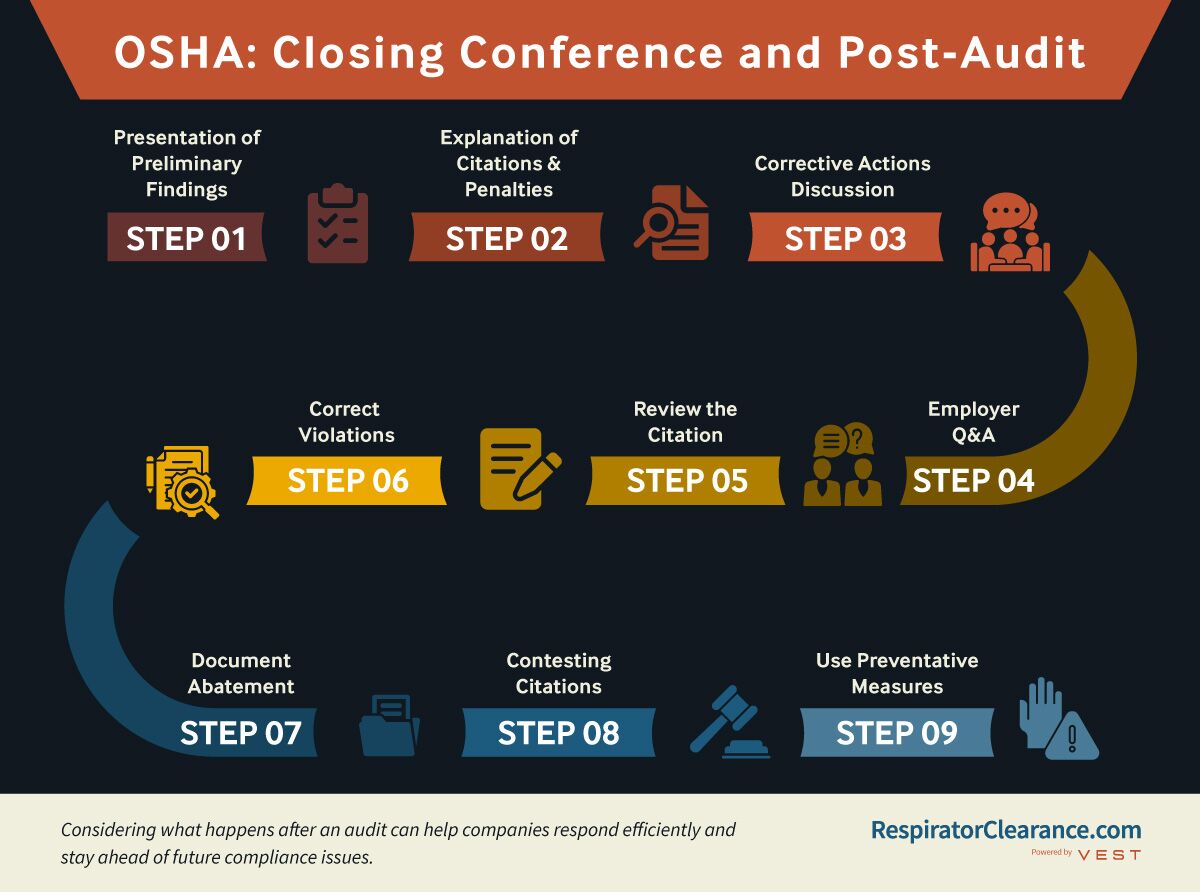
An OSHA inspection doesn't end when the inspector leaves the job site. The final phase determines the next steps for businesses.
Step 1: Presentation of Preliminary Findings
The OSHA inspector provides an overview of their observations including identified hazards, potential violations, and areas of concern.
Step 2: Explanation of Citations & Penalties
If OSHA has found violations, the inspector will explain the type and severity of each issue. Citations fall into different categories:
- Other-than-Serious -- Violations that have a direct relationship to safety but would not cause death or serious harm
- Serious -- Violations where there is substantial probability that death or serious harm could result
- Willful -- Violations committed with intentional disregard for OSHA requirements
- Repeat -- Violations of any standard where a substantially similar violation was previously cited
Step 3: Corrective Actions Discussion
OSHA provides guidance on how to fix violations, including required corrective measures, deadlines for compliance (abatement dates), and whether interim protective measures are needed.
Step 4: Employer Q&A
Employers have the opportunity to ask questions about findings, timelines, appeal processes, and penalty reduction options.
Step 5: Review the Citation
Shortly after the closing conference, OSHA will issue an official citation letter outlining specific violations, required corrective actions, abatement deadlines, and associated penalties.
Step 6: Correct Violations
Businesses that accept the citations must fix the violations within the timeframe OSHA provides.
Step 7: Document Abatement
Once violations are corrected, businesses must provide proof of compliance including photographs, repair logs, updated training records, and official abatement certification.
Step 8: Contesting Citations
If an employer believes a citation was issued unfairly, they have the right to formally contest it by:
- Submitting a Notice of Intent to Contest within 15 working days
- Providing evidence or testimony
- Attending an informal OSHA conference
Step 9: Preventative Measures
The best way to avoid future OSHA violations is to proactively improve workplace safety through:
- Regular internal audits
- Updated training programs
- Continuous air quality monitoring
- Employee engagement in safety culture
- Staying current with regulatory changes
How VestMed Supports OSHA Compliance
OSHA audits can be time-consuming and stressful, especially when businesses are unsure if their documentation and safety protocols meet regulatory standards. VestMed simplifies the process, ensuring companies stay compliant before, during, and after an inspection.
Pre-Audit Readiness
VestMed provides a structured compliance approach, helping businesses identify potential gaps before an audit. From conducting internal safety assessments to supporting training programs, companies get the tools to ensure their workplace meets regulatory compliance.
Workplace Safety & Documentation Support
VestMed digitizes compliance tracking, offering automated alerts for expiring certifications and a centralized platform for fit tests, training logs, and PPE records. This ensures that businesses can produce documentation instantly when OSHA requests it.
Post-Audit Compliance & Ongoing Safety Management
OSHA compliance doesn't stop once the audit is over. VestMed helps businesses address citations, implement long-term improvements, and prevent repeat violations with continuous compliance monitoring.
Are You Ready for an Audit?
VestMed provides the tools and guidance needed to simplify compliance and keep businesses audit-ready. Let VestMed help you stay compliant and prepared.
For more information or a consultation, contact us.
Related reading
- OSHA Compliance
OSHA Audit Process: The Necessity of Preparation
Essential steps to prepare for an OSHA audit: understand the standards, run internal audits, maintain documentation, and train employees for compliance.
- OSHA Compliance
Inside an OSHA Audit: What to Expect During the Walkthrough
What to expect during an OSHA walkthrough inspection: scope, hazard identification, employee interviews, sampling and testing, and immediate corrections.
- OSHA Compliance
OSHA Closing Conference: How to Respond to Audit Findings
How to handle the OSHA closing conference: review findings, understand citations and penalties, discuss corrective actions, and protect your business.
- OSHA Compliance
OSHA Inspection: How to Ace the Documentation Review Process
Master the OSHA documentation review: which documents are required, how to keep them accurate and organized, and how to verify compliance.
Kevin Rittger
MD, FACEP, Founder and Medical Director