OSHA Compliance
Avoid Violations with OSHA Compliant Respiratory Protection Solutions
 Kevin Rittger, MD, FACEP, Founder and Medical DirectorUpdated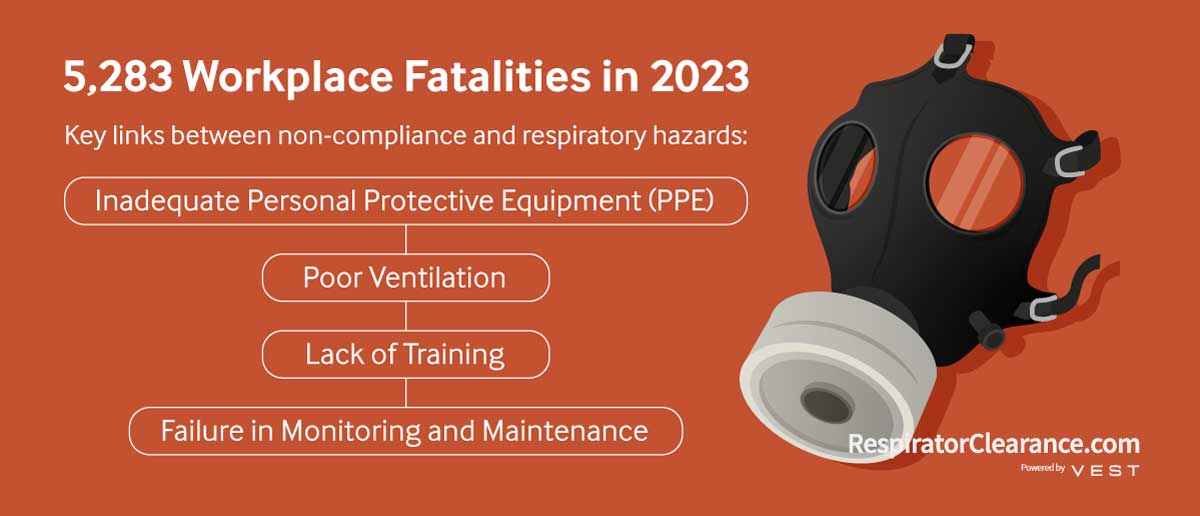
Did you know? In 2023, 5,283 workplace fatalities were linked to non-compliance with safety regulations. Many of these deaths resulted from exposure to hazardous materials--serious workplace hazards that businesses often overlook.
Airborne contaminants like dust, fumes, and toxic chemicals pose long-term health risks, yet many companies fail to keep employees safe. Being OSHA compliant isn't just about avoiding fines--it's about protecting lives.
Effective safety programs educate employees about safety and ensure proper respiratory protection. But what do OSHA regulations require, and what are the consequences of failing to comply?
What is OSHA Compliance?
OSHA compliance means adhering to all standards and requirements established by the Occupational Safety and Health Administration (OSHA) to maintain workplace safety and health. This involves following regulations on occupational hazards, machinery safety, chemical exposure, and other critical safety measures.
OSHA's Respiratory Protection Standards
Any workplace with airborne hazards must adhere to strict guidelines to prevent long-term health risks for employees.
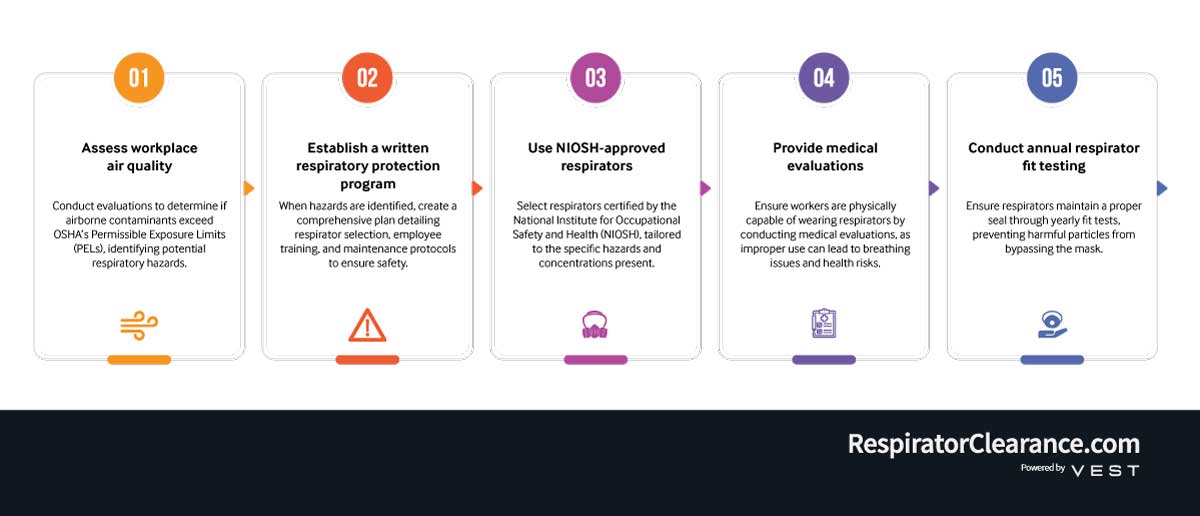
OSHA Standard 29 CFR 1910.134 outlines the regulations that protect workers from harmful dust, fumes, vapors, and gases that could lead to respiratory illnesses or severe health conditions. Employers are required to:
- Develop and implement a written respiratory protection program
- Conduct workplace hazard assessments to identify airborne risks
- Provide NIOSH-approved respirators appropriate for identified hazards
- Ensure employees receive medical evaluations before using respirators
- Conduct initial and annual fit testing for all respirator users
- Train employees on proper respirator use, maintenance, and limitations
- Maintain detailed records of medical evaluations, fit tests, and training
- Perform regular program evaluations and updates
Failure to comply with these regulations doesn't just lead to financial penalties--it puts workers' health and safety at serious risk.
Companies Penalized by OSHA for Violations
OSHA has taken strict enforcement action against companies that have neglected respiratory protection standards. These cases highlight the costly consequences of failing to comply.
| Company | Fines | Date |
|---|---|---|
| Amazon | $85,800 | February 2023 |
| Tesla | $110,863 | January 2018 |
| Smithfield Foods | $93,750 | March 2023 |
| Tyson Foods | $117,109 | June 2017 |
| General Electric | $88,000 | December 2015 |
| BP Products North America | $81,340,000 | September 2022 |
| Starbucks | $97,522 | February 2018 |
These cases highlight that even major corporations face substantial fines for respiratory protection failures. Employers who neglect proper safety measures expose their businesses to significant financial and legal repercussions.
Best Practices for Ensuring Compliance
Following OSHA's respiratory protection standards isn't just about avoiding fines--it's about preventing workplace injuries and ensuring employee safety.
Regular Employee Training
Workers should receive annual safety training on proper respirator use, maintenance, and limitations. They should also understand:
- When to replace protective equipment
- How to follow proper cleaning procedures
- How to perform user seal checks
- Signs and symptoms of overexposure
- Emergency procedures for respiratory incidents
Internal Compliance Audits
Routine audits help identify gaps before an OSHA inspection occurs. Key areas to review:
- Safety and health program effectiveness
- Training records completeness and currency
- Air quality reports and monitoring data
- Equipment maintenance and inspection logs
- Documentation accessibility and organization
Learn more about conducting effective audits in our guide to OSHA audit preparation.
NIOSH-Approved Respirators
Not all respirators provide adequate protection. Employers must:
- Use respirators certified for specific workplace hazards
- Regularly check inventory for expired or damaged equipment
- Match respirator type to identified exposure levels
- Ensure proper selection based on assigned protection factors
- Replace filters and cartridges according to manufacturer schedules
Air Quality Monitoring
Conducting regular air sampling ensures airborne contaminants remain below permissible exposure limits (PELs):
- Perform initial exposure assessments for all processes
- Conduct periodic monitoring based on risk levels
- Document all sampling results and methodologies
- Take immediate corrective action if levels exceed thresholds
- Re-assess when processes, materials, or controls change
Fostering a Safety-First Culture
Encouraging employees to report hazards and providing easy access to safety resources:
- Anonymous hazard reporting systems
- Regular safety committee meetings
- Recognition programs for safety contributions
- Open communication between management and workers
- Safety metrics visibility across the organization
Leveraging VestMed for OSHA Compliance
Ensuring employees are medically cleared for respirator use is a critical component of OSHA compliance. VestMed simplifies this process by reducing paperwork, minimizing downtime, and ensuring all workers meet medical and fit-testing requirements.
Step-by-Step Process of Online Medical Evaluations
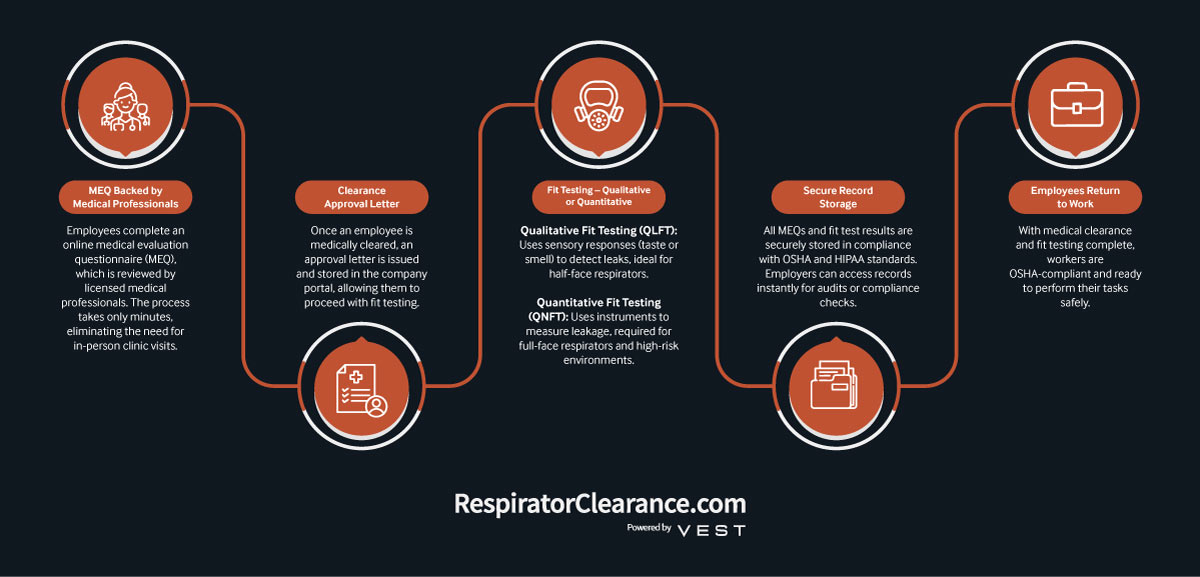
1. MEQ Backed by Medical Professionals: Employees complete an online medical evaluation questionnaire (MEQ), which is reviewed by licensed medical professionals. The process takes only minutes, eliminating the need for in-person clinic visits.
2. Clearance Approval Letter: Once an employee is medically cleared, an approval letter is issued and stored in the company portal, allowing them to proceed with fit testing.
3. Fit Testing -- Qualitative or Quantitative: After medical clearance, employees undergo fit testing to verify their respirator provides an adequate seal. Results are documented and stored.
4. Secure Record Storage: MEQs and fit test results are encrypted and stored according to OSHA recordkeeping requirements. Employers can access compliance records for audits or compliance checks.
5. Employees Return to Work: With medical clearance and fit testing complete, workers are OSHA-compliant and ready to perform their tasks safely.
Key Benefits of Using VestMed for OSHA Compliance
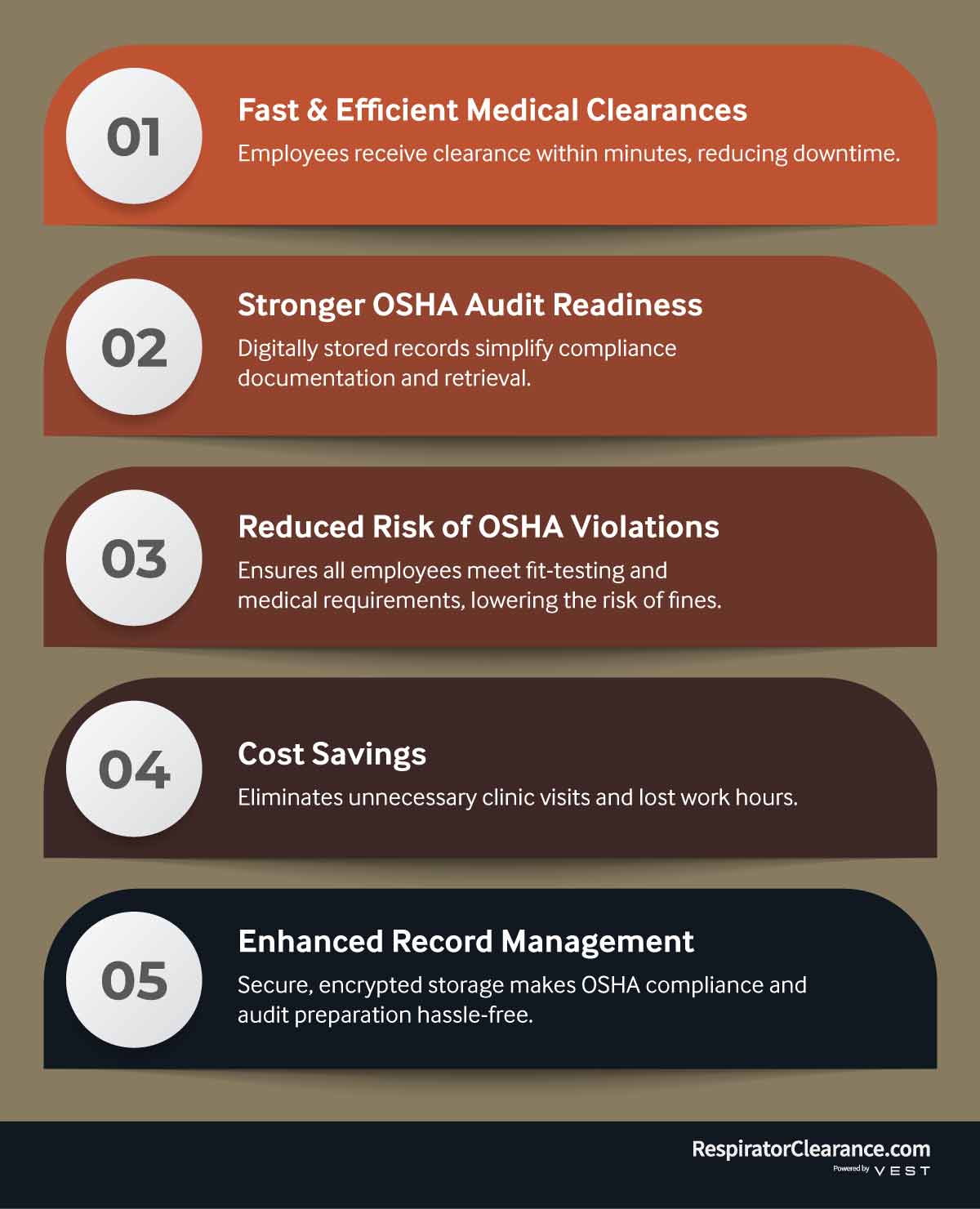
Fast & Efficient Medical Clearances
Employees receive clearance within minutes, minimizing downtime while meeting health standards.
Stronger OSHA Audit Readiness
Digitally stored medical records ensure compliance with safety standards and streamline documentation retrieval during OSHA audits.
Reduced Risk of OSHA Violations
Helps businesses meet all compliance requirements, reducing potential risks and costly fines.
Cost Savings
Eliminates unnecessary clinic visits and lost work hours while maintaining compliance.
Enhanced Record Management
Secure, encrypted storage keeps accurate records, making OSHA compliance and audit preparation effortless.
Failing to comply with OSHA regulations on respiratory protection not only exposes employees to serious health hazards but also puts businesses at risk of costly fines, legal consequences, and reputational damage.
Ensuring a safe workplace requires proper training, medical evaluations, and fit testing to prevent work-related injuries and uphold long-term safety. Companies that stay OSHA compliant don't just protect their workforce--they also safeguard their bottom line.
Stay OSHA Compliant with VestMed
Prioritize safety and health today to create a safer working environment for tomorrow. Stay compliant, protect your employees, and avoid costly penalties with the support of experienced safety professionals.
Get started with VestMed or contact us for more information.
Related reading
- OSHA Compliance
OSHA Audit Process & Respiratory Compliance Guide
Complete guide to the OSHA audit process for respiratory compliance: preparation, opening conference, walkthrough, documentation review, and closing.
- OSHA Compliance
OSHA Audit Process: The Necessity of Preparation
Essential steps to prepare for an OSHA audit: understand the standards, run internal audits, maintain documentation, and train employees for compliance.
- OSHA Compliance
OSHA Citation: Closing the Loop After the Audit
How to read, respond to, and resolve OSHA citations after an audit: decode citations, correct violations, document abatement, and contest unfair findings.
- OSHA Compliance
OSHA Inspection: How to Ace the Documentation Review Process
Master the OSHA documentation review: which documents are required, how to keep them accurate and organized, and how to verify compliance.
Kevin Rittger
MD, FACEP, Founder and Medical Director