OSHA Compliance
OSHA Audit Opening Conference: What Employers Need to Know
 Kevin Rittger, MD, FACEP, Founder and Medical DirectorUpdated
Key Insight: The opening conference isn't just administrative--it directly influences the flow of the inspection. Businesses that approach it with preparation and transparency can foster a cooperative atmosphere, ensuring inspectors receive the information they need without unnecessary delays.
Before any workstations are inspected or documents reviewed, an OSHA audit opening conference marks the official start of the process. This initial meeting sets the tone and expectations between the compliance officer and the employer, laying the groundwork for the rest of the inspection.
It's where the inspector outlines the purpose of the visit, discusses procedures, and confirms what areas will be examined. Think of it as the briefing before a major project--the more clarity established at the beginning, the fewer surprises along the way.
This step is not just administrative; it directly influences the flow of the inspection. Businesses that approach it with preparation and transparency can foster a cooperative atmosphere, ensuring inspectors receive the information they need without unnecessary delays.
From verifying credentials to defining the scope, this discussion provides an opportunity for employers to ask questions and ensure their rights are recognized.
A well-managed opening conference signals that a company takes compliance seriously. It's not just about following regulations--it's about showing an active commitment to workplace safety.
I. Presentation of Credentials
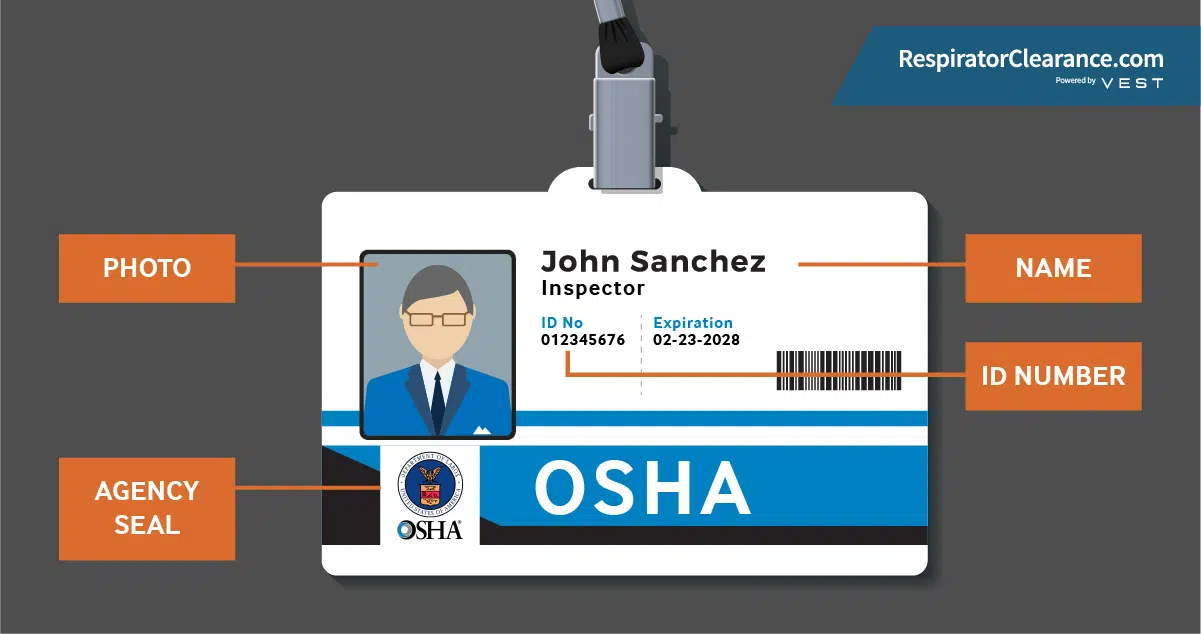
Before an OSHA audit officially begins, compliance officers are required to present their credentials. This is not just a formality; it's a legal safeguard ensuring authorized personnel conduct inspections.
Verifying Identity
OSHA inspectors carry official identification, including their name, photograph, and unique credentials. Employers should always request to see these details before the inspection begins.
A legitimate inspector will have no issue providing this information, and businesses should compare the credentials against OSHA's official standards.
Additionally, businesses should contact their local OSHA office for verification if there's any doubt about an inspector's legitimacy. Scams and impersonations have been reported in various industries.
Establishing Authority
Beyond verifying identity, businesses must understand the scope of an OSHA inspector's authority. Inspectors are assigned to specific regions and industries, and their ability to enforce regulations comes from federal guidelines.
Employers should ask about the purpose of the inspection and whether it stems from:
- A routine check
- An employee complaint
- A specific hazard report
- An industry-wide enforcement initiative
Understanding why OSHA is there can help businesses focus their responses and prepare relevant documents.
Understanding Employer Rights
While OSHA has the authority to inspect workplaces, employers have the right to request clarification on several key points before proceeding:
- The legal basis for the inspection
- Whether a warrant is required
- The specific standards being evaluated
- The expected duration of the inspection
If an employer has serious concerns about the inspection, they can request a delay until they have legal counsel present. However, delaying without valid reasoning could result in a warrant being issued.
Setting the Tone
The way an employer interacts with an OSHA inspector in the first few minutes can set the stage for the entire audit. A calm, professional, and cooperative approach helps create an inspection that remains focused and structured.
Rushed, dismissive, or confrontational behavior could raise red flags and prompt a deeper investigation.
II. Explanation of Inspection Scope
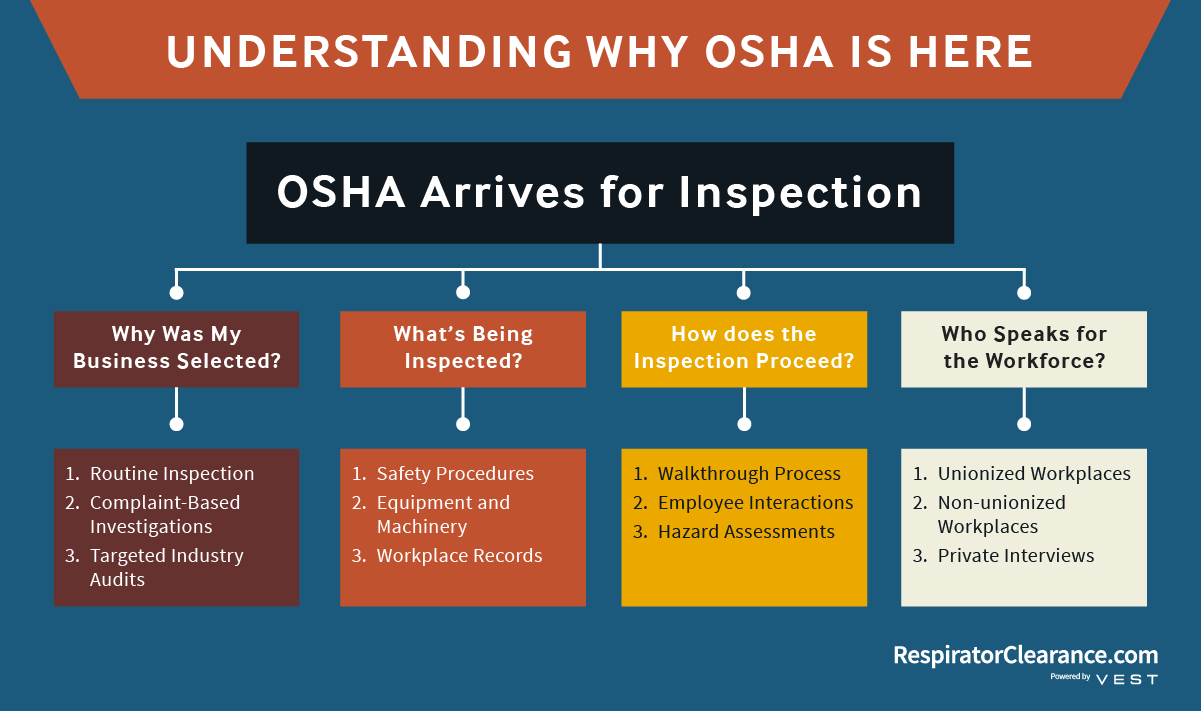
Before an OSHA inspector starts reviewing safety practices, they must explain why the workplace was selected for an audit.
Why Was My Business Selected?
OSHA inspections fall into three primary categories:
- Programmed inspections -- Random or scheduled audits based on industry risk
- Complaint-driven inspections -- Triggered by employee reports of unsafe conditions
- Incident-based inspections -- Following workplace accidents, injuries, or fatalities
Employers should listen carefully to the stated reason and ask for clarification if necessary. If the inspection stems from a complaint, they have the right to know the nature of the issue without necessarily receiving the complainant's identity.
What's Being Inspected?
Once the reason for the inspection is established, OSHA will clarify what areas, equipment, and records will be reviewed:
- Specific work areas or departments
- Safety equipment and PPE compliance
- Training records and certifications
- Air quality and environmental conditions
- Specific OSHA standards being evaluated
How Does the Inspection Proceed?
The inspection itself follows a structured process:
First, the Walkthrough Process. The inspector will tour the workplace, observing operations and identifying potential hazards. Employers should ensure that work areas are clean, safe, and compliant with OSHA standards.
Second, Employee Interactions. OSHA has the right to speak with employees to gain insight into workplace conditions. These interviews can be one-on-one or group discussions, and employees should feel free to share safety concerns without fear of retaliation.
Third, Hazard Assessments. Inspectors will evaluate potential risks, including air quality, noise levels, chemical exposure, and machine safety.
Who Speaks for the Workforce?
During an OSHA inspection, employees have the right to representation:
- Union representatives can participate
- Non-union workplaces can designate a safety committee member
- Employees can speak privately with inspectors
- Employers cannot interfere with these interviews or retaliate
III. Discussion of Procedures
Once the OSHA inspection begins, compliance officers systematically assess workplace conditions. Each step has a clear purpose.
| Inspection Step | What the Inspector Looks For | Employer's Responsibilities | How to Prepare |
|---|---|---|---|
| Walkthrough Process | Workplace hazards, PPE compliance, and safety procedures | Ensure a safe, clean environment and correct hazards in advance | Conduct an internal walkthrough and fix obvious safety issues |
| Employee Interviews | Employee knowledge of safety rules, concerns about hazards | Allow private interviews and avoid retaliation | Educate workers on safety procedures and OSHA rights |
| Sampling and Testing | Air quality, noise levels, and chemical exposure | Cooperate with sampling procedures and provide necessary data | Maintain air quality reports and ensure hazard controls are working |
| Documentation Review | Injury logs, safety training records, hazard reports | Present requested records promptly and ensure accuracy | Keep OSHA Form 300 logs, training certifications, and audits up to date |
| Safety Protocols | Proper use of PPE, emergency procedures, hazard controls | Demonstrate active compliance with OSHA safety standards | Regularly train employees on PPE use and emergency actions |
| Machine and Equipment Safety | Guarding, lockout/tagout procedures, maintenance records | Ensure all machines are safe to operate and meet compliance | Conduct equipment safety inspections and document maintenance |
| Emergency Preparedness | Fire exits, alarm systems, evacuation procedures | Confirm emergency plans are in place and communicated | Run emergency drills and verify fire extinguishers and exits |
| Chemical and Hazardous Material Handling | Proper storage, labeling, and safety data sheets (SDS) | Maintain correct labeling and provide safety training | Store hazardous materials correctly and update SDS files |
IV. Employee Representation
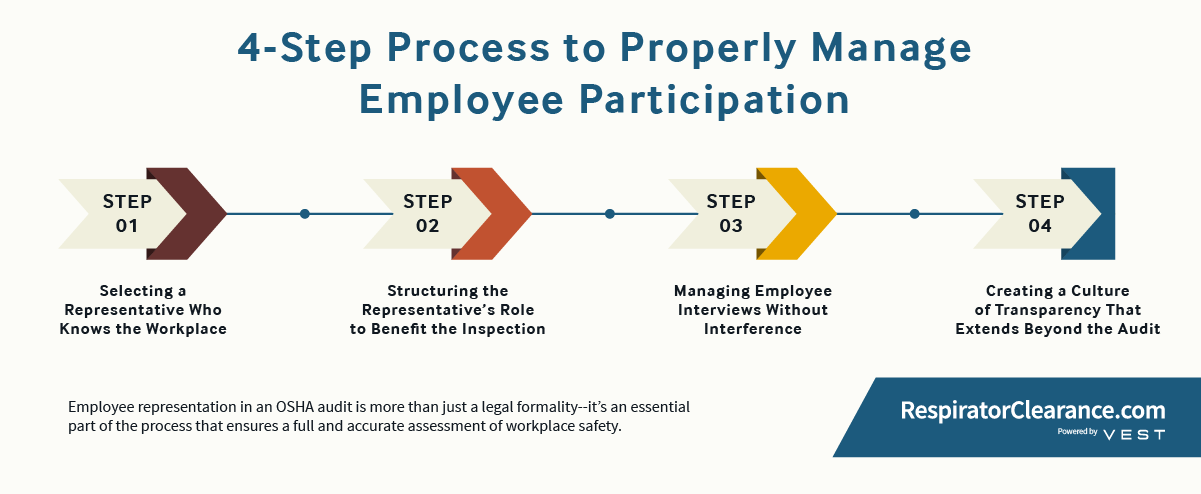
Employee representation in an OSHA audit is more than just a legal formality--it's an essential part of the process that ensures a full and accurate assessment of workplace safety.
Step 1: Selecting a Representative Who Knows the Workplace
The best representatives are those familiar with workplace conditions, safety protocols, and previous incidents. Employers should ensure that workers understand their right to choose someone who can effectively communicate their concerns.
Step 2: Structuring the Representative's Role
Rather than seeing the employee representative as an external observer, businesses should recognize their role as a source of valuable, work-specific insights. Employers should facilitate this by providing necessary access to documentation, hazard reports, and safety records.
Step 3: Managing Employee Interviews Without Interference
Employee interviews are private and cannot be influenced by employers. However, businesses can support the process by:
- Informing employees about the interview process in advance
- Reassuring workers that participation is voluntary and protected
- Ensuring interview spaces are private and comfortable
- Making it clear that retaliation is prohibited
Step 4: Creating a Culture of Transparency
Ensuring a smooth OSHA audit isn't just about getting through the inspection--it's about fostering a work environment where employees regularly participate in safety discussions.
V. Review of Documentation
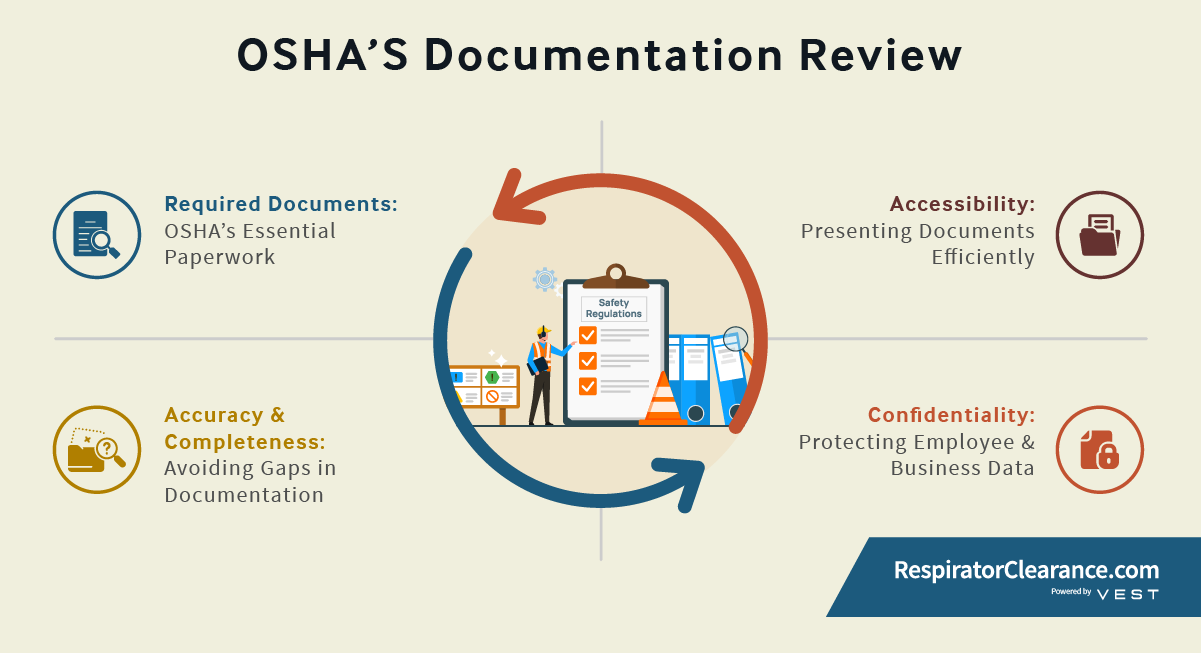
When OSHA arrives for an inspection, they want proof that safety procedures are followed and recorded properly.
Required Documents
OSHA inspectors will request specific records:
- Written Respiratory Protection Program
- Fit test records for all respirator users
- Medical clearance evaluations
- Training logs and certification records
- OSHA 300 Log (injury and illness records)
- Hazard communication plans
- Equipment maintenance records
- Air quality monitoring reports
Accuracy & Completeness
Inspectors examine accuracy to ensure compliance. They look for:
- Consistent dates across related documents
- Proper signatures and authorizations
- Complete entries without blank fields
- Current and up-to-date information
- Alignment between records and actual practices
Accessibility
OSHA expects documents to be immediately available upon request:
- Maintain a centralized filing system
- Use digital records with backup copies
- Designate a person responsible for records retrieval
- Conduct periodic accessibility drills
Confidentiality
Not all OSHA-related records should be openly accessible. Certain documents, especially those containing medical or personal employee information, must be kept private and only shared with authorized personnel.
A well-managed Opening Conference sets the stage for a structured and efficient OSHA audit. Ensuring that credentials are verified, the inspection scope is clear, employees are represented, and documentation is in order can make a significant difference in the process.
Ready for a Smooth OSHA Audit Opening Conference?
If you're unsure whether your business is fully prepared for an OSHA audit, VestMed can help. Our team provides expert guidance on compliance, documentation, and workplace safety.
Contact us today to ensure your next audit runs smoothly.
Related reading
- OSHA Compliance
OSHA Audit Process & Respiratory Compliance Guide
Complete guide to the OSHA audit process for respiratory compliance: preparation, opening conference, walkthrough, documentation review, and closing.
- OSHA Compliance
Inside an OSHA Audit: What to Expect During the Walkthrough
What to expect during an OSHA walkthrough inspection: scope, hazard identification, employee interviews, sampling and testing, and immediate corrections.
- OSHA Compliance
OSHA Audit Process: The Necessity of Preparation
Essential steps to prepare for an OSHA audit: understand the standards, run internal audits, maintain documentation, and train employees for compliance.
- OSHA Compliance
OSHA Closing Conference: How to Respond to Audit Findings
How to handle the OSHA closing conference: review findings, understand citations and penalties, discuss corrective actions, and protect your business.
Kevin Rittger
MD, FACEP, Founder and Medical Director