OSHA Compliance
Inside an OSHA Audit: What to Expect During the Walkthrough
 Kevin Rittger, MD, FACEP, Founder and Medical DirectorUpdated
Key Insight: The walkthrough is where compliance is put to the test. Inspectors systematically move through a facility, examining safety conditions, reviewing records, and speaking with employees to determine whether safety protocols hold up under real-world scrutiny.
The factory floor buzzed with activity as workers moved between machines. Unbeknownst to them, an OSHA compliance officer had already begun the audit. He watched as a technician adjusted his mask--and noticed the poor seal. That tiny oversight wasn't just a mistake; it was a violation that left an entire team exposed to hazardous fumes.
Moments like this are precisely why OSHA walkthroughs exist--not to control businesses, but to hold them accountable for worker safety.
Compliance officers don't just scan documents; they observe actual working conditions, ensuring safety procedures are more than just policies on paper. Every unnoticed hazard, every ignored protocol, is a risk that can have real consequences.
With respiratory protection and workplace hazards under intense scrutiny, businesses must be prepared to demonstrate that safety isn't just a legal requirement but a core commitment.
The walkthrough is a checkpoint where preparation meets reality, and cutting corners isn't an option.
I. Scope of the OSHA Walkthrough
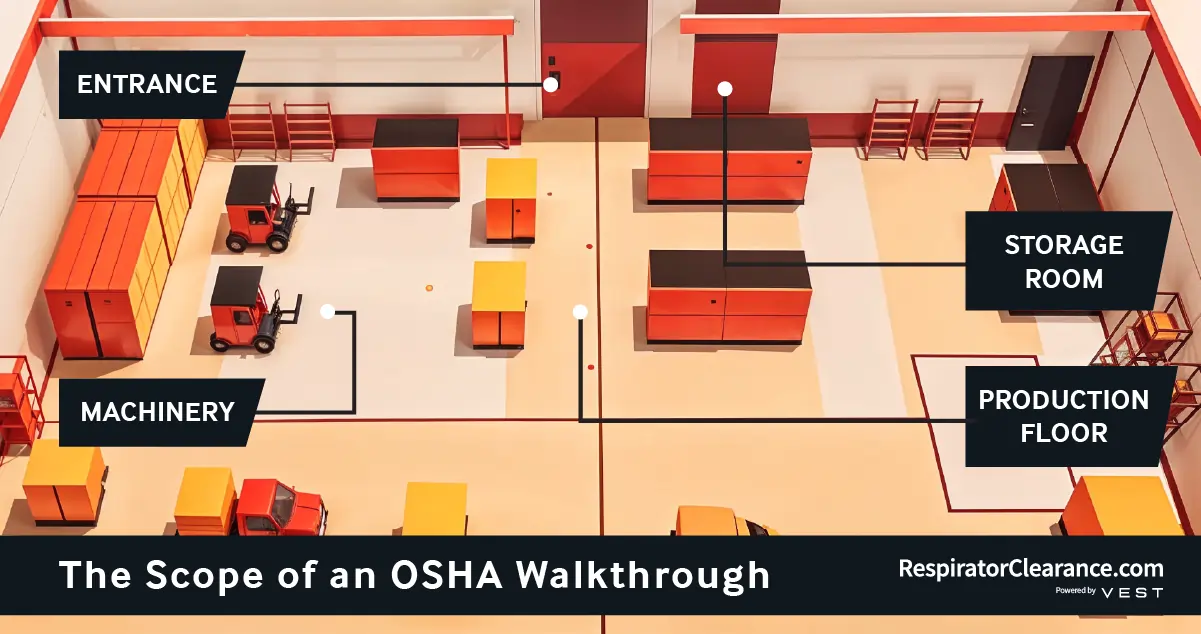
The OSHA walkthrough is where compliance is put to the test. Inspectors systematically move through a facility, examining safety conditions, reviewing records, and speaking with employees.
This stage determines whether a company's safety protocols hold up under real-world scrutiny--or if there are gaps that put workers at risk.
Understanding the Scope of an OSHA Walkthrough
OSHA inspections are not random. Each walkthrough follows a structured approach, covering key areas of workplace safety. The goal is to assess potential hazards, ensure compliance with Occupational Safety and Health standards, and verify that employees are trained and protected.
The scope may vary depending on industry risks, reported incidents, or specific complaints filed against a company.
Determining the Scope
Not all inspections cover an entire facility. Multiple factors shape the focus of a walkthrough, including:
- Employee complaints
- Past violations
- The type of work being performed
High-risk industries, such as manufacturing and chemical processing, are often subject to more thorough inspections due to their inherent dangers. Compliance officers also prioritize areas where prior issues were found, ensuring that corrective actions were implemented correctly.
Key Areas of Focus
Inspectors strategically evaluate high-risk zones and safety-critical operations including:
- Production floors
- Confined spaces
- Storage rooms with hazardous materials
- Locations where heavy machinery is used
Respiratory protection is a primary focus, particularly in workplaces with airborne contaminants. Inspectors check for proper ventilation, safe handling of hazardous substances, and adherence to personal protective equipment (PPE) protocols.
OSHA Standards That Apply
Specific OSHA regulations govern every industry. One of the most frequently cited standards is 29 CFR 1910.134, which outlines requirements for respiratory protection including proper respirator selection, fit testing, and employee training.
Other applicable standards may involve hazardous material handling, fall protection, and emergency response preparedness.
The Role of Documentation
Paperwork matters just as much as physical conditions. Inspectors review safety manuals, incident reports, and maintenance logs to confirm that companies are following OSHA guidelines.
A well-organized record system signals a proactive approach to safety, while missing or outdated documents can raise red flags. Employers should have easily accessible records that prove compliance.
Employee Interviews and Safety Awareness
Compliance isn't just about policies--it's about people. Inspectors conduct interviews with workers to gauge their understanding of safety protocols and assess whether training programs are effective.
Employees may be asked about PPE usage, emergency procedures, and their ability to report safety concerns.
II. Identifying Hazards
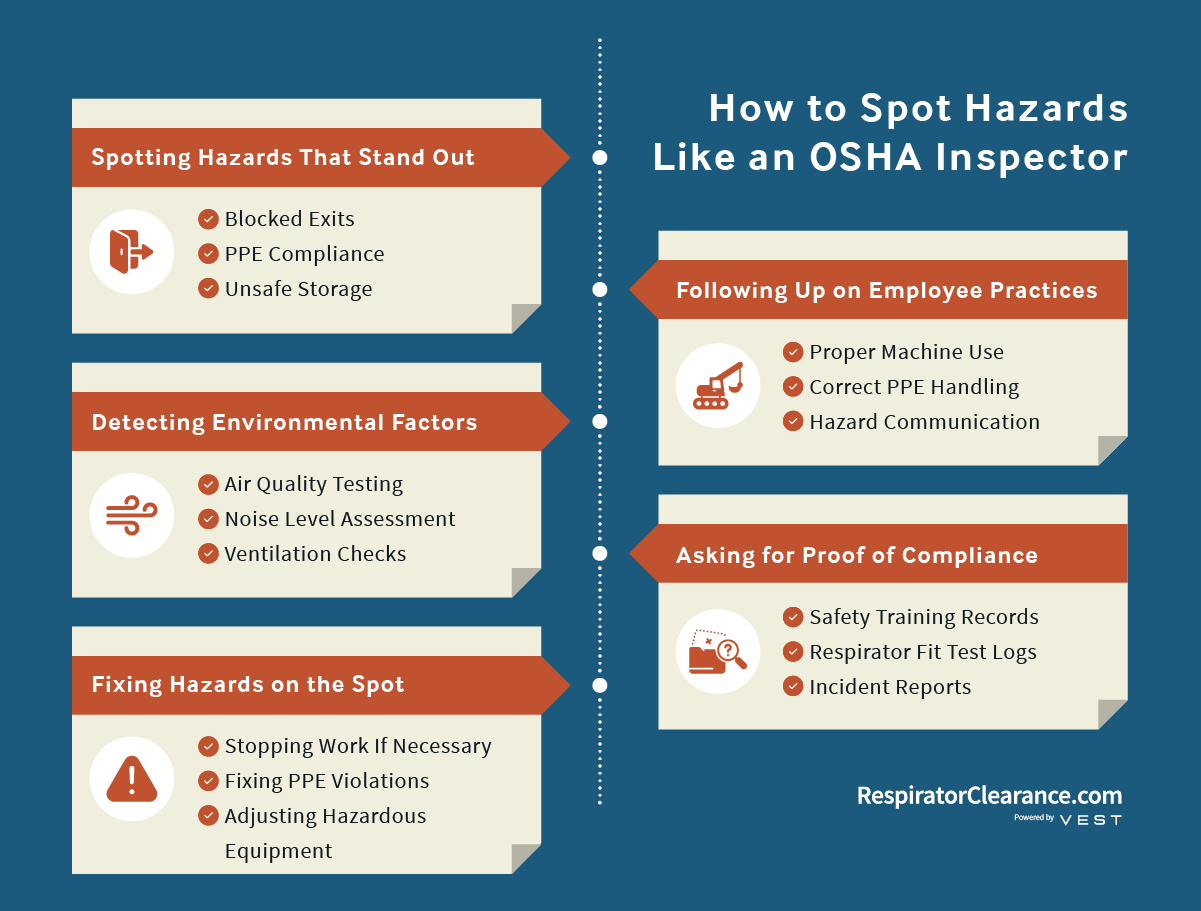
Hazards are not always obvious, and OSHA inspectors are trained to catch safety risks that employers or workers might overlook. Their goal is not just to enforce regulations but to prevent accidents, injuries, and long-term health issues.
Spotting Hazards That Stand Out
Inspectors look for physical conditions that pose immediate risks:
- Damaged or improperly maintained equipment
- Blocked emergency exits or evacuation routes
- Improper chemical storage or missing labels
- Inadequate lighting in work areas
- Slip, trip, and fall hazards
- Missing or damaged safety guards on machinery
Following Up on Employee Practices
Inspectors watch how workers interact with their environment:
- Are employees wearing required PPE correctly?
- Do workers follow proper respirator seal check procedures?
- Are safe work practices being followed consistently?
- Do employees know emergency procedures?
Detecting Environmental Factors
What you can't see can be just as dangerous:
- Air quality levels exceeding permissible exposure limits
- Inadequate ventilation in enclosed spaces
- Noise levels above OSHA thresholds
- Temperature extremes without proper controls
- Chemical vapors or dust without proper containment
Asking for Proof of Compliance
Even if a workplace looks safe, missing paperwork can lead to citations:
- Current fit test records for all respirator users
- Medical evaluation clearances
- Training completion documentation
- Air monitoring results
- Equipment inspection logs
III. Employee Interviews
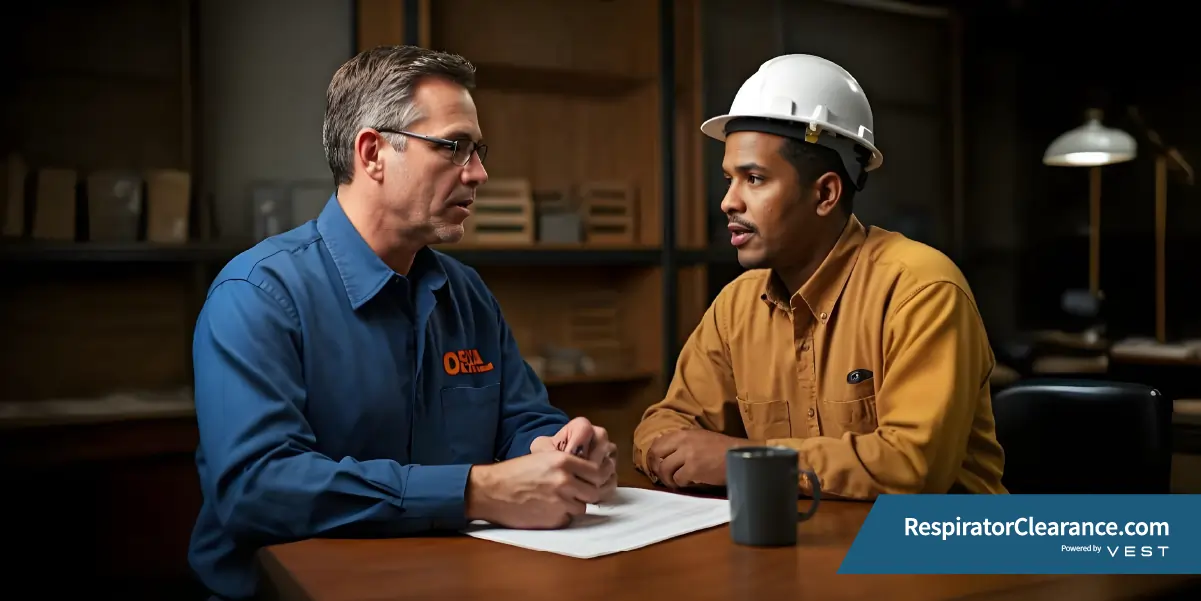
During an OSHA audit, paperwork and policies tell one side of the story--but employees tell the rest. Interviews give inspectors a firsthand look at how safety measures function in reality.
Why OSHA Interviews Employees During an Audit
A company may have a well-documented safety program, but if employees aren't aware of the procedures--or don't follow them--there's a problem.
Interviews allow OSHA inspectors to gauge the effectiveness of workplace training, ensuring workers understand safety regulations and their rights.
A well-trained workforce strengthens a company's compliance record, while widespread confusion or uncertainty can indicate deeper safety issues.
How Inspectors Encourage Honest Feedback
Employees may hesitate to speak up if they fear backlash from management. OSHA ensures that all interviews remain confidential, protecting workers from retaliation.
Inspectors may speak with employees privately to encourage honest answers, assuring them that their responses will not be shared with their employer in a way that identifies them.
What Kind of Questions Do OSHA Inspectors Ask?
Interview topics depend on the industry and nature of the inspection:
- Have you been trained on respiratory protection procedures?
- When was your last fit test performed?
- Do you know how to report a safety hazard?
- What PPE are you required to wear for your tasks?
- Have you ever been asked to work without proper protection?
- Do you know the emergency evacuation procedures?
- Are safety meetings held regularly?
Employees' Rights and Their Role in Compliance
Workers are not obligated to answer OSHA's questions, but they do have the right to share concerns without fear of retaliation. Employers cannot intimidate, threaten, or discipline employees for participating in an audit interview.
How Employee Interviews Impact Audit Findings
What employees say--or don't say--can heavily influence the outcome of an OSHA audit. If interviews reveal inconsistencies between what's documented and what's happening on the floor, inspectors will dig deeper.
A workplace where employees confidently answer safety questions is a sign of strong compliance. However, hesitation or contradictions may signal deeper problems that could lead to citations.
IV. Sampling and Testing
Not all workplace hazards are immediately visible. OSHA inspectors use sampling and testing to measure air quality, noise levels, ventilation efficiency, and other factors that impact worker safety.
| Sampling Type | Methods | Analysis and Results | Documentation |
|---|---|---|---|
| Air Quality Testing | Inspectors collect air samples using pumps and filters to detect contaminants like dust, fumes, and toxic chemicals | Results compared to OSHA's Permissible Exposure Limits (PELs) | Employers must keep air quality test reports for future reference |
| Noise Level Monitoring | Sound meters and dosimeters measure decibel levels in different work areas | Results indicate whether workers need hearing protection | Noise exposure records must be maintained for high-decibel environments |
| Ventilation Assessment | Inspectors check airflow systems, fume hoods, and exhaust fans | Data reveals if ventilation is adequate or needs improvement | Document ventilation maintenance schedules and airflow measurements |
| Surface Contamination Sampling | Wipes and swabs test work surfaces for hazardous residues | Results determine if decontamination procedures are effective | Records must confirm routine surface testing |
| Heat Stress Monitoring | OSHA measures temperature, humidity, and worker hydration levels | Data helps determine if workers are at risk for heat stress | Document heat exposure prevention efforts |
| Chemical Exposure Sampling | Air, surface, or bodily fluid samples detect harmful chemical exposure | Results show if employees are being overexposed | Maintain chemical exposure records and ensure proper training |
If any test results exceed OSHA's safety thresholds, employers must take corrective action--this may involve improving ventilation, supplying enhanced PPE, or reducing exposure levels.
V. Immediate Corrections
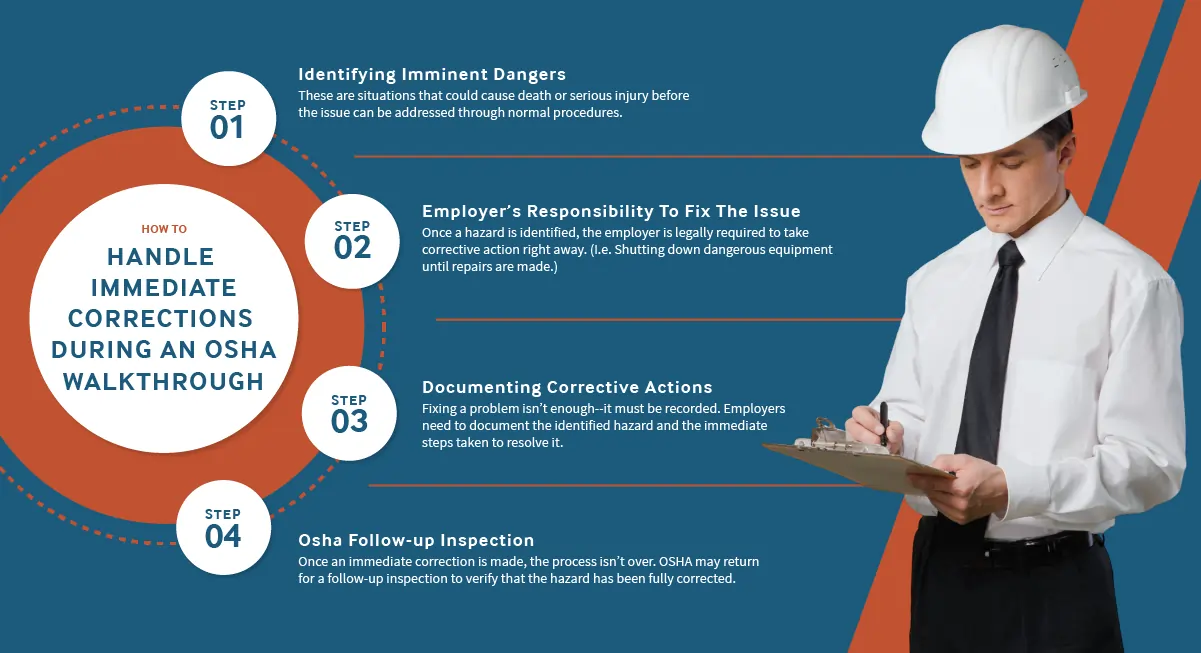
When OSHA inspectors uncover an immediate danger, businesses don't have the luxury of waiting--action must be taken on the spot.
Step 1: Identifying Imminent Dangers
OSHA defines imminent dangers as situations that could cause death or serious injury before the issue can be addressed through normal procedures:
- Workers operating without required respiratory protection in hazardous atmospheres
- Malfunctioning ventilation systems in confined spaces
- Uncontrolled release of toxic chemicals
- Structural failures posing collapse risk
- Electrical hazards with immediate shock/fire risk
Step 2: Employer's Responsibility to Fix the Issue
Once a hazard is identified, the employer is legally required to take corrective action immediately:
- Shutting down unsafe operations
- Evacuating affected areas
- Providing proper PPE to exposed workers
- Isolating hazardous substances
- Implementing temporary engineering controls
Step 3: Documenting Corrective Actions
Fixing a problem isn't enough--it must be recorded:
- What hazard was identified
- What corrective action was taken
- When the correction was completed
- Who was responsible for the fix
- What follow-up measures were implemented
Step 4: OSHA Follow-Up Inspection
OSHA may return to verify that:
- The hazard has been permanently corrected
- No new related hazards have developed
- Employees are now properly protected
- Documentation proves ongoing compliance
The OSHA walkthrough isn't just a formality--it's a critical step in ensuring workplace safety. From hazard identification to employee interviews and immediate corrections, every part of the process determines whether a business is genuinely compliant.
Staying prepared means maintaining up-to-date documentation, training employees effectively, and addressing hazards before an inspection occurs.
Are You Audit-Ready for OSHA?
Don't wait for a citation to take safety seriously. VestMed can help you assess risks, improve compliance, and confidently prepare for audits.
Contact us today to safeguard your workplace and meet OSHA standards.
Related reading
- OSHA Compliance
OSHA Audit Process & Respiratory Compliance Guide
Complete guide to the OSHA audit process for respiratory compliance: preparation, opening conference, walkthrough, documentation review, and closing.
- OSHA Compliance
OSHA Audit Process: The Necessity of Preparation
Essential steps to prepare for an OSHA audit: understand the standards, run internal audits, maintain documentation, and train employees for compliance.
- OSHA Compliance
OSHA Audit Opening Conference: What Employers Need to Know
What happens during the OSHA audit opening conference: credential verification, inspection scope, employee representation, and documentation review.
- OSHA Compliance
OSHA Inspection: How to Ace the Documentation Review Process
Master the OSHA documentation review: which documents are required, how to keep them accurate and organized, and how to verify compliance.
Kevin Rittger
MD, FACEP, Founder and Medical Director