
OSHA Compliance
OSHA Closing Conference: How to Respond to Audit Findings
 Kevin Rittger, MD, FACEP, Founder and Medical DirectorUpdated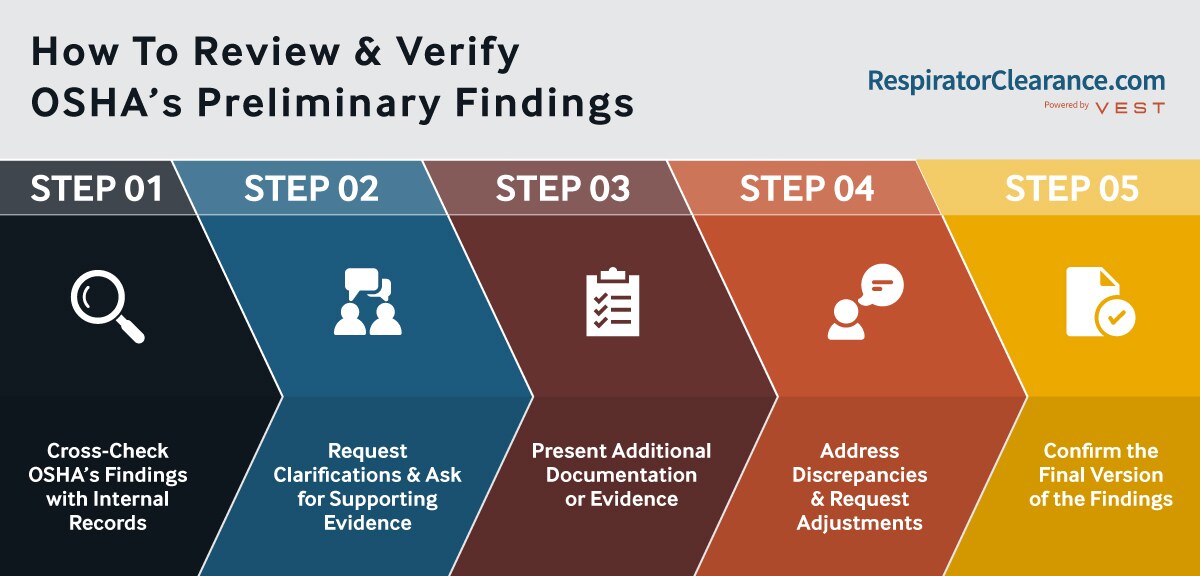
Did you know? An OSHA violation can cost up to $16,131, but if deemed willful or repeated, that figure can skyrocket to $161,323 per violation. The closing conference is your last opportunity to take control before fines are set in stone.
This is when OSHA inspectors present their findings, outline potential citations, and decide whether your company faces costly penalties or walks away with a clean slate.
The closing conference isn't just a debriefing. It's an opportunity to push back on inaccuracies, demand clarity, and take control of the next steps before citations become final.
Understanding the inspection process can mean the difference between crippling penalties and a manageable compliance strategy. Employers who come prepared can correct errors, mitigate fines, and protect their workforce--but only if they know how to handle this conversation effectively.
I. Review Preliminary Findings
Once the OSHA inspection progresses to the closing conference, the first order of business is reviewing the preliminary findings. This is when inspectors outline their observations, highlighting potential violations and compliance concerns.
It's not just a formality--it's your last chance to correct inaccuracies, provide clarifications, and ensure that every issue is properly documented before citations are finalized.
Understanding the Compliance Officer's Report
The OSHA compliance officer will present a detailed account of the inspection, covering workplace hazards, procedural missteps, and regulatory violations. This report isn't a final verdict, but it does set the stage for potential citations.
Each finding will connect to an OSHA standard, helping employers see where they need to improve compliance.
How to Review and Verify Findings
OSHA's preliminary findings are subject to review, clarification, and even correction. Use this step-by-step process:
Step 1: Cross-Check Findings with Internal Records
Before responding to OSHA's preliminary report, compare their observations with your internal safety logs, training records, and maintenance reports.
- Identify whether the findings match your documentation
- Look for discrepancies between OSHA's observations and your records
- Flag any findings that may be based on incomplete information
Step 2: Request Clarifications & Ask for Supporting Evidence
Not every violation is as clear-cut as it seems. If a compliance officer reports a hazard without referencing specific OSHA regulations, ask for clarification.
What to Ask the Inspector:
- Which specific OSHA standard was violated?
- What evidence supports this finding?
- Were all relevant documents reviewed before this determination?
- Is this finding based on the inspector's observation or employee testimony?
Step 3: Present Additional Documentation or Evidence
If OSHA's findings miss key details, proactively provide records that contradict or clarify the citation:
- Updated training records showing compliance
- Recent fit test results proving respirator compliance
- Maintenance logs demonstrating equipment upkeep
- Photographs or video of corrected conditions
Step 4: Address Discrepancies & Request Adjustments
If discrepancies exist, discuss corrections before the final report is issued:
- Present evidence that contradicts inaccurate findings
- Request a revised assessment based on new information
- Negotiate abatement timelines if corrections are already underway
Step 5: Confirm the Final Version of the Findings
Request a final summary of the report before the closing conference concludes:
- Verify all corrections and amendments are reflected
- Get written confirmation of any changes to findings
- Ensure you understand all next steps and deadlines
II. Explain Citations and Penalties
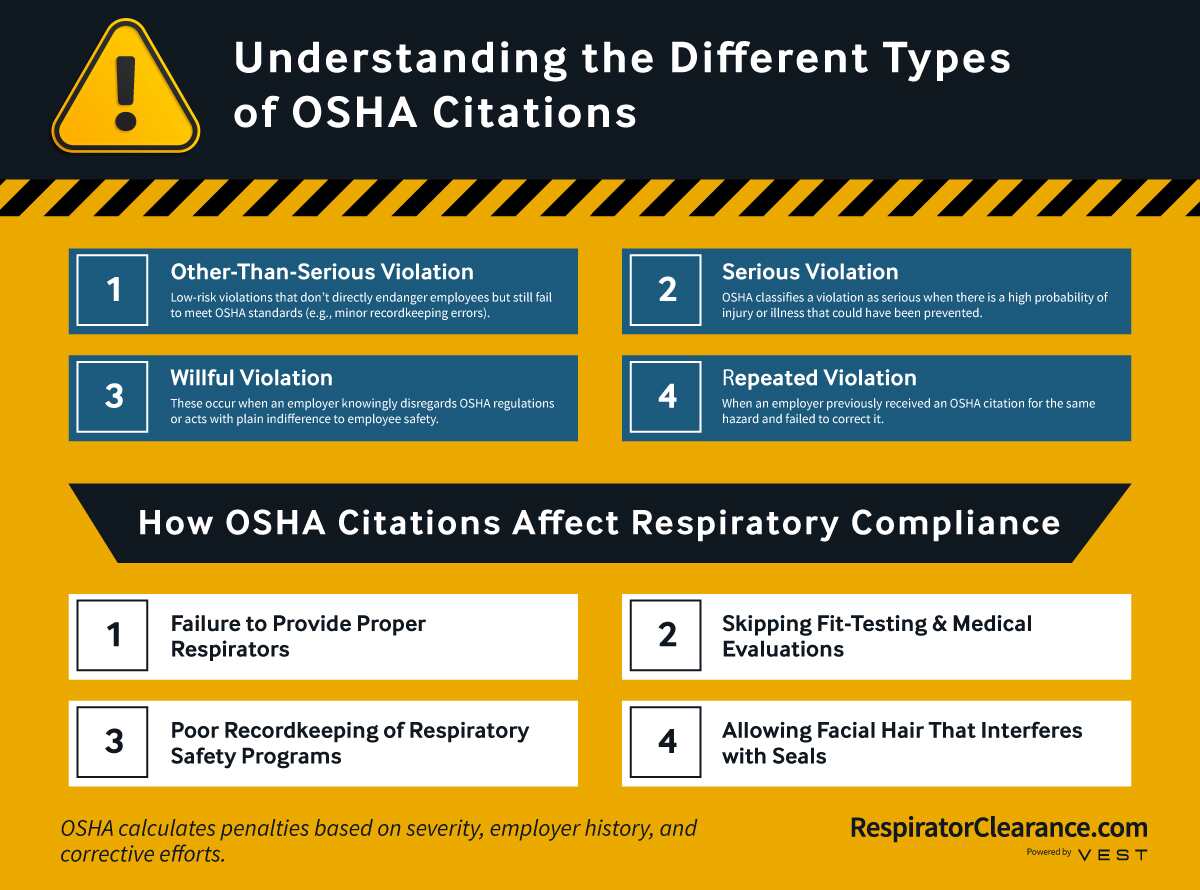
When OSHA issues citations, they aren't all the same. Understanding these distinctions is critical.
Top 10 Most Frequent OSHA Citations
| Type | Citation | Number of Violations |
|---|---|---|
| Fall Protection--General Requirements | 1926.501 | 7,271 |
| Hazard Communication | 1910.1200 | 3,213 |
| Ladders | 1926.1053 | 2,978 |
| Scaffolding | 1926.451 | 2,859 |
| Powered Industrial Trucks | 1910.178 | 2,561 |
| Lockout/Tagout | 1910.147 | 2,554 |
| Respiratory Protection | 1910.134 | 2,481 |
| Fall Protection--Training Requirements | 1926.503 | 2,112 |
| Eye & Face Protection | 1926.102 | 2,074 |
| Machine Guarding | 1910.212 | 1,644 |
Understanding the Different Types of OSHA Citations
- Other-than-Serious -- Violations with a direct relationship to safety but unlikely to cause death or serious harm. Penalties up to $16,131.
- Serious -- Substantial probability of death or serious harm. Penalties up to $16,131.
- Willful -- Intentional disregard for OSHA requirements. Penalties from $11,524 to $161,323.
- Repeat -- Substantially similar violation previously cited within 5 years. Penalties up to $161,323.
Breaking Down OSHA's Penalty Structure
OSHA calculates penalties based on:
- Severity and probability of harm
- Employer size (small businesses may receive reductions)
- Good faith efforts toward compliance
- History of violations
- Quick-fix reductions for immediate corrections
Employers' Rights: Asking for Clarification on Citations
Employers don't have to accept citations at face value. They have the right to:
- Request detailed explanation of each violation
- Ask how penalty amounts were calculated
- Inquire about penalty reduction options
- Understand the appeals process and timelines
How OSHA Citations Affect Respiratory Compliance
Respiratory protection violations are one of the most frequently cited OSHA infractions. Common issues include:
- Missing or incomplete written respiratory protection programs
- Expired or undocumented fit tests
- Lack of medical evaluations for respirator users
- Improper respirator selection for identified hazards
- Inadequate employee training on respirator use
III. Discuss Corrective Actions
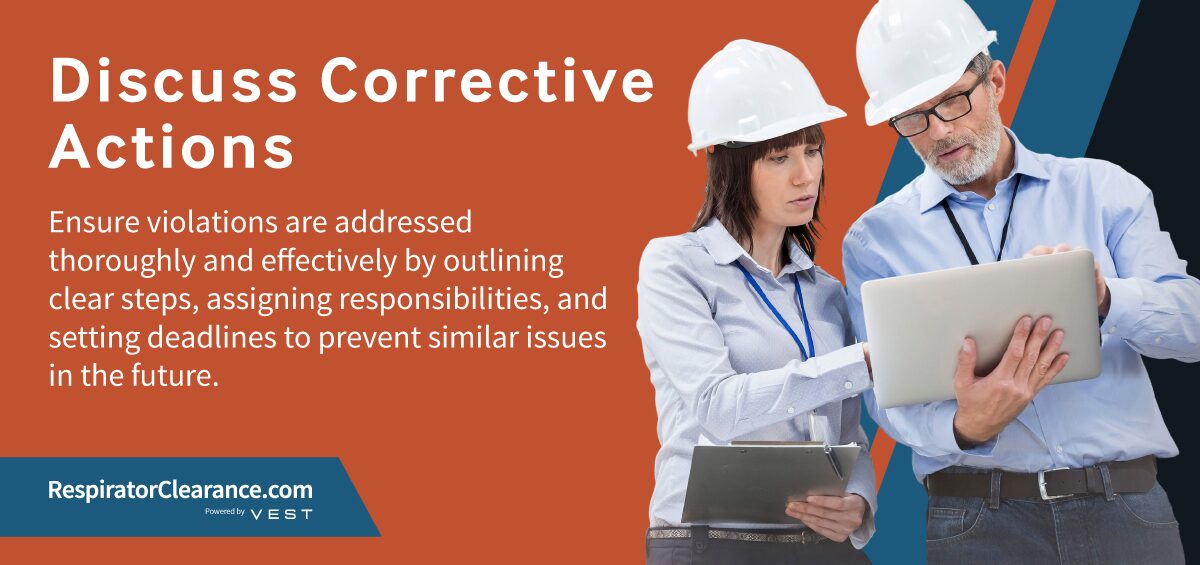
Receiving an OSHA citation isn't the end of the road. It's an opportunity to fix workplace hazards, strengthen safety protocols, and prevent future violations.
Meet OSHA's Abatement Deadlines
Once a citation is issued, OSHA assigns a specific timeframe (abatement period) for correcting violations:
- Take immediate steps to correct hazards posing direct risk
- Request an extension by showing proof of progress if more time is needed
- Failing to meet deadlines leads to additional penalties
Develop a Corrective Action Plan
- Identify the Root Cause -- Determine why the violation occurred
- Assign Responsibility -- Designate a safety officer to oversee implementation
- Set Clear Deadlines -- Break corrective actions into manageable steps
- Train Employees -- Conduct additional training if violations involve procedures or PPE
- Prevent Recurrence -- Introduce new controls or policies
Document and Report Corrections to OSHA
Proof of abatement must include:
- Photographic evidence (before-and-after)
- Repair and maintenance logs
- Employee training records
- Official abatement certification (OSHA Form 3000)
Prepare for OSHA Follow-Up Inspection
- Keep compliance records ready and accessible
- Conduct an internal audit before OSHA's return visit
- Ensure employees are informed of safety updates
Strengthen Respiratory Compliance Programs
- Conduct fit testing for all workers required to wear respirators
- Review air quality monitoring and workplace exposure limits
- Verify all employees have access to correct respirators
- Enhance training on respirator use, maintenance, and storage
IV. Answer Questions
Asking the right questions during the OSHA closing conference ensures violations are properly understood and penalties are fair.
| Employer Question | Why It Matters |
|---|---|
| Were there similar violations among other employers in our industry? | Helps determine if you're facing common challenges or more serious issues |
| Are there recommended best practices beyond minimum requirements? | Gain insight into proactive safety measures |
| What factors could lead to reduced fines? | OSHA sometimes offers penalty reductions or alternative solutions |
| If corrections are already underway, can this affect the citation? | May lower penalties or modify citation category |
| Will this be classified as a repeat offense if a similar issue arises? | Understand how repeat status is determined |
| What OSHA training programs are available? | OSHA provides free consultation programs and safety training |
| Are there OSHA grants for safety improvements? | Some industries qualify for funding |
| What should internal audits include for ongoing compliance? | Align internal audits with regulatory standards |
| How often does OSHA update its standards? | Stay informed about policy changes |
Addressing OSHA's findings goes beyond penalty avoidance. It's about ensuring a safer workplace and long-term compliance. Effective OSHA audit preparation and a structured approach to the closing conference allow employers to resolve uncertainties, correct violations efficiently, and reduce financial risks.
Need Expert Support for OSHA Respiratory Compliance?
VestMed makes the process simple with fast, reliable online medical evaluations for respirator use.
Stay compliant--contact VestMed today!
Related reading
- OSHA Compliance
OSHA Audit Process & Respiratory Compliance Guide
Complete guide to the OSHA audit process for respiratory compliance: preparation, opening conference, walkthrough, documentation review, and closing.
- OSHA Compliance
OSHA Citation: Closing the Loop After the Audit
How to read, respond to, and resolve OSHA citations after an audit: decode citations, correct violations, document abatement, and contest unfair findings.
- OSHA Compliance
OSHA Inspection: How to Ace the Documentation Review Process
Master the OSHA documentation review: which documents are required, how to keep them accurate and organized, and how to verify compliance.
- OSHA Compliance
OSHA Audit Process: The Necessity of Preparation
Essential steps to prepare for an OSHA audit: understand the standards, run internal audits, maintain documentation, and train employees for compliance.
Kevin Rittger
MD, FACEP, Founder and Medical Director